

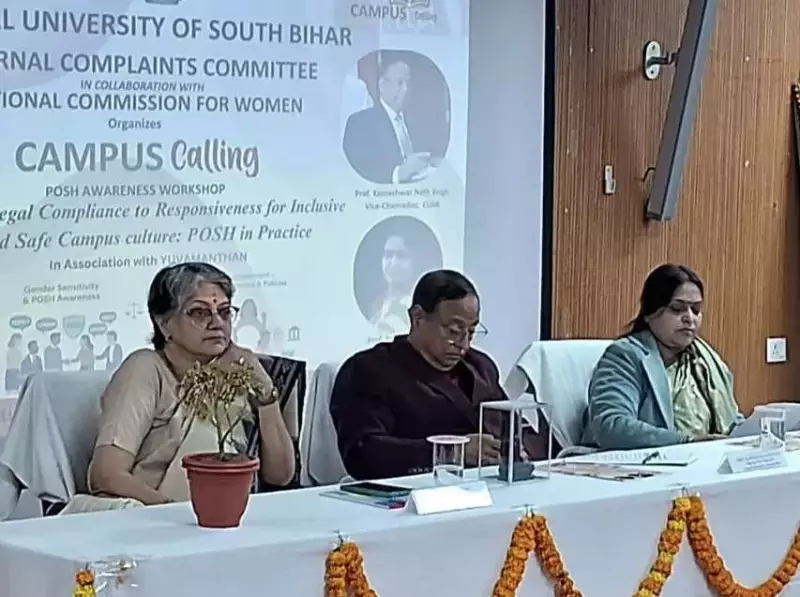
In a significant move to bolster workplace safety and gender equality, Bihar State Women Commission (BSWC) chairperson Apsara Mishra on Thursday underscored the critical need for widespread sensitization of women to enhance the effective implementation of the Prevention of Sexual Harassment (POSH) Act, 2013. Her remarks came during a day-long workshop organized by the Central University of South Bihar (CUSB) in collaboration with the National Commission for Women (NCW), New Delhi, where she served as the chief guest.
Empowering Women Through Awareness and Education
During her address, Mishra elaborated on the commission's operational strategies and informed faculty members and students about various initiatives undertaken by the BSWC to address sexual harassment cases in workplaces. She stressed the importance of creating robust social awareness against the sexual harassment of women across all environments, whether at home or in professional settings. "It is imperative that we foster a culture of respect and safety, empowering women to recognize and report harassment without fear," she emphasized, highlighting the role of education in driving societal change.
CUSB's Commitment to a Safe Campus Environment
CUSB Vice-Chancellor Kameshwar Nath Singh, in his presidential remarks, affirmed that the university has implemented numerous measures to ensure the safety of all individuals, particularly female students, making it a secure campus. He expressed regret that despite existing legal frameworks, sexual harassment against women persists in society, underscoring the urgent need for a shift in social values and attitudes toward females. "Protecting women from malicious forces is not just a legal obligation but a moral imperative that will propel India toward its vision of becoming a Viksit Bharat by 2047," Singh stated, linking women's safety to national development goals.

Encouraging Voices Against Harassment
Rashmi Tripathi, chairperson of CUSB's internal complaints committee, delivered a welcome address that highlighted the committee's vital role and significance. She encouraged students to speak out against any form of sexual harassment, reinforcing the university's commitment to providing a supportive and responsive mechanism for grievance redressal. The event concluded with a vote of thanks proposed by Chetan Jaiswal, wrapping up a productive session focused on actionable insights and collaborative efforts.
This workshop marks a proactive step in aligning educational institutions with national objectives, fostering an environment where women can thrive free from harassment. By integrating awareness campaigns with institutional policies, stakeholders aim to build a more equitable society, as envisioned in the POSH Act's provisions.






