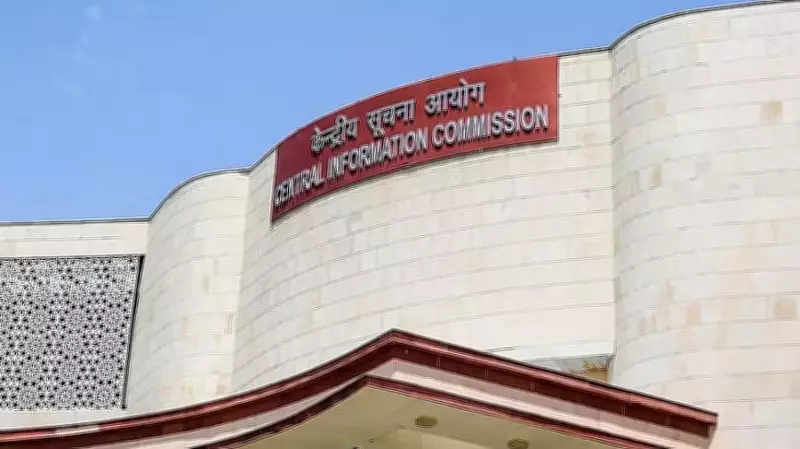
The Central Information Commission (CIC) has pulled up the Central Haj Committee for denying information under the Right to Information (RTI) Act regarding the expenditure and contract for the maintenance of Mumbai's Haj House. In its order, the Commission asserted that the expenditure on the maintenance of the Haj House cannot be treated as third-party information and therefore could not be denied by invoking Section 8(1)(j) of the RTI Act.
Background of the RTI Application
The RTI application was filed by an activist seeking details of the expenditure incurred and the contract awarded for the maintenance of the Haj House in Mumbai. The Central Haj Committee refused to provide the information, citing that it was third-party information and thus exempted under Section 8(1)(j), which protects personal information unless it is in the public interest.
CIC's Ruling
During the hearing, the CIC observed that the expenditure on a public building like the Haj House, which is funded by public money, cannot be considered private or third-party information. The Commission directed the Central Haj Committee to provide the requested information to the applicant within 15 days of the order. The CIC also noted that the contract and expenditure details are matters of public interest and transparency is essential in the utilization of public funds.

Implications of the Order
The CIC's decision reinforces the principle that information related to public spending and contracts cannot be withheld under the garb of third-party privacy. This order is expected to set a precedent for similar RTI cases involving public institutions and their expenditure. The Central Haj Committee, which operates under the Ministry of Minority Affairs, is now required to disclose the details of the maintenance contract and expenses of the Haj House in Mumbai.