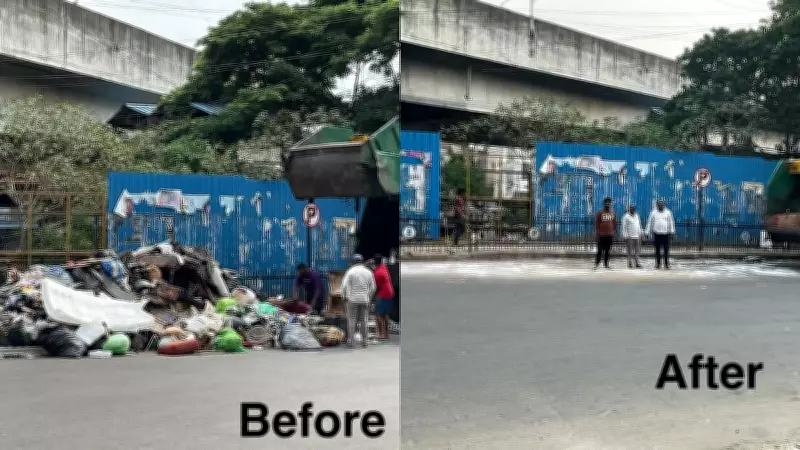
The Resident Welfare Association (RWA) of Bengaluru's Cooke Town has emerged as a beacon of effective solid waste management, demonstrating how community-led initiatives can overcome the city's persistent garbage crisis. The RWA's interventions have not only streamlined complaint management but also significantly improved garbage collection and dumping processes, setting a replicable model for other neighborhoods.
Streamlined complaint management system
The RWA introduced a structured mechanism to handle grievances related to garbage collection. Residents can now report issues through a dedicated system, ensuring timely resolution. This has reduced delays and improved accountability among waste collection crews. According to RWA officials, the number of unresolved complaints has dropped by over 40% since the system was implemented in early 2026.
Community-driven waste segregation
Central to the success is the emphasis on waste segregation at source. The RWA conducted awareness campaigns and provided color-coded bins to every household. Regular inspections and feedback loops have ensured compliance. As a result, the area now sends significantly less mixed waste to landfills, with recyclables being channeled to authorized processors.

Impact and replicability
The Cooke Town model has attracted attention from other RWAs and the Bruhat Bengaluru Mahanagara Palike (BBMP). The RWA president stated, "Our approach proves that when residents take ownership, even a complex problem like garbage can be managed effectively. We are happy to share our learnings with other communities." The initiative has also fostered a sense of civic pride and reduced littering in public spaces.
Challenges and future plans
Despite the success, challenges remain, including ensuring consistent participation from all residents and managing bulk waste from commercial establishments. The RWA plans to introduce a penalty system for repeat offenders and expand composting facilities. With sustained efforts, Cooke Town aims to achieve zero-waste status by 2028.