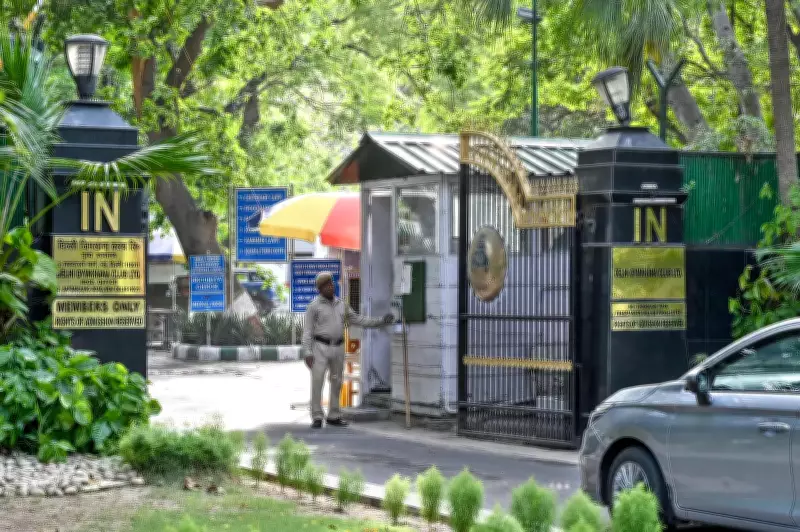
For more than a century, the Delhi Gymkhana Club has occupied 27.3 acres of prime Safdarjung Road land, outlasting the British Empire, India's Independence, Partition, shifting political landscapes, and repeated internal conflicts. It has always been a club, offering tennis courts, a ballroom, billiards tables, squash courts, a swimming pool, gravel paths, and sprawling lawns. But it has also served as a map of power in the capital.
A Hub of the Elite
Behind its white colonial facades and guarded gates, former presidents, generals, judges, diplomats, bureaucrats, ministers, industrialists, and their families mingled in a world that was intimate, discreet, and, according to some, deeply hierarchical. The club was not just a recreational space but a symbol of status and influence in Delhi's social and political circles.
The Eviction Threat
Now, the Delhi Gymkhana Club faces an existential crisis. The government has issued an eviction order, demanding that the club vacate the land it has called home for over 100 years. The order has sparked a debate about the club's legacy and its right to remain on this prime property. Supporters argue that the club is a heritage institution that has contributed to the city's social fabric, while critics claim it occupies valuable government land that could be used for public purposes.

Historical Significance
Established in 1913, the Delhi Gymkhana Club was originally a social hub for British officers and Indian royalty. After Independence, it evolved into a meeting place for the country's elite, hosting key political and diplomatic events. Its members have included several Prime Ministers, Presidents, and Chief Justices of India. The club's architecture and sprawling grounds are a reminder of Delhi's colonial past and its transformation into a modern capital.
The Battle Ahead
The club's management has vowed to challenge the eviction order in court, citing its historical importance and the lack of alternative accommodation for its members. Meanwhile, the government maintains that the land is needed for urban development and public welfare projects. The outcome of this legal battle will determine not only the fate of the club but also set a precedent for other historic institutions occupying government land across India.