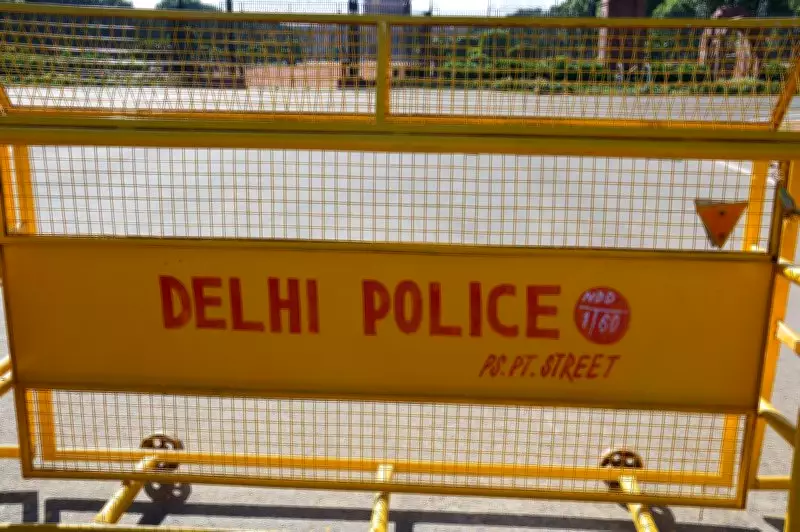
The Delhi Traffic Police announced on Friday that as part of a comprehensive mobility overhaul across the national capital, they have created eight signal-free road corridors, issued over 48.4 lakh challans in the first six months of 2026, and expanded citizen participation through the newly launched Project SANGAM to tackle congestion and improve road safety.
Multi-Pronged Strategy for Safer Commutes
The department stated that its multi-pronged strategy, combining engineering interventions, technology-driven enforcement, public outreach, and inter-agency coordination, is aimed at making commuting safer, smoother, and more efficient. One of the flagship achievements has been the development of eight signal-free stretches — six in North Delhi and two in East Delhi — achieved through the removal of redundant traffic signals, closure of unauthorised median cuts, creation of U-turns, and rationalisation of intersections.
Corridors such as Netaji Subhash Place (NSP) to the Rithala Metro station and Vikas Marg between Laxmi Nagar and Karkari Mor have already recorded improved traffic flow and reduced travel time, according to officials.

Intensified Enforcement with Automated Systems
The traffic police have also intensified enforcement using a combination of field policing and automated systems. Between January and June 2026, authorities issued 48,42,953 challans for traffic violations, surpassing the corresponding period last year. Of these, over 17.21 lakh were generated through Red Light Violation Detection (RLVD) and Over Speed Violation Detection (OSVD) systems. The police also registered 2,187 FIRs to curb dangerous driving.
Engineering Measures to Ease Congestion
To ease congestion at major bottlenecks, the traffic police worked with agencies including the PWD, MCD, NHAI, DMRC, and DTC on a series of engineering measures. These included creation of additional bus bays and pedestrian infrastructure at ISBT Kashmere Gate, replacement of a foot over bridge at Majnu Ka Tila, diversion of buses through the Khajuri flyover, relocation of bus stands at Adhchini village and Ashram Chowk, creation of dedicated pick-up and drop-off zones at Anand Vihar ISBT, and a proposed flyover at Kalindi Kunj.
Project SANGAM: Citizen Participation in Traffic Management
A major focus this year has been Project SANGAM (Synergistic Action & Networked Governance for Area Mobility), launched on April 3 under the guidance of the Delhi Lieutenant Governor. The initiative seeks to involve Resident Welfare Associations (RWAs) and Market Welfare Associations (MWAs) in identifying and resolving local traffic issues. Since its launch, 309 stakeholder meetings have generated 514 suggestions, of which 368 have already been implemented, while the remainder have been referred to the agencies concerned.
The initiative has already resulted in improvements at various locations, including Elephant Chowk-UER-II junction in Dwarka, West Patel Nagar, and GTK Road near Azadpur.
Road Safety Outreach and Training
The department has simultaneously expanded its road safety outreach. Between January and June, its road safety cell educated over 2.84 lakh school students and reached more than 15.44 lakh citizens through awareness campaigns. It also trained over 12,000 auto-rickshaw, taxi, and e-rickshaw drivers, more than 11,000 DTC drivers and conductors, and over 5,300 corporate employees. The campaigns focused on helmet use, pedestrian safety, lane discipline, prevention of drunken driving, mission zero death on road, and environmental initiatives such as “Red Light On, Gaadi Off and No Honking”.
Monsoon Preparedness and Emergency Response
With the onset of the monsoon, the traffic police identified 169 waterlogging-prone locations and coordinated with civic agencies such as PWD, MCD, NHAI, NDMC, and DDA to ensure swift response. Six disaster management vehicles equipped with motor pumps and tree-cutting machines have also been deployed to improve emergency response during adverse weather.
Risks Faced by Traffic Police Personnel
The department also highlighted the risks faced by its personnel, stating that 14 traffic police officers sustained injuries and one officer lost his life while on duty between January and June this year.