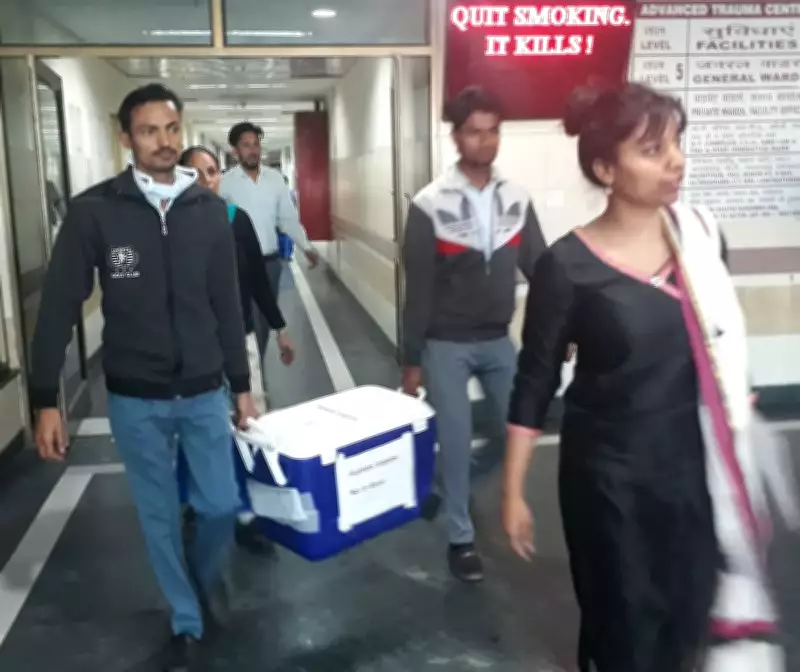
A 17-year-old boy recently walked into a Delhi courtroom seeking permission to donate a piece of his liver to save his dying father. The Delhi High Court, after careful deliberation, permitted it. At one level, it is a moving story of a family confronted with an impossible choice. At another, it reminds us that courts do much more than settle disputes. Sometimes, they quietly reshape public policy in ways that continue saving lives long after the judgment has been delivered.
The 2004 judgment that changed the law
This is not the first time the Delhi High Court has done so in the field of organ transplantation. More than two decades ago, while hearing Balbir Singh v. Authorisation Committee in September 2004, the court realised that the problem before it was not merely one of interpreting the Transplantation of Human Organs Act, 1994. The law itself required a fresh look. Rather than confining itself to the facts of one case, the court directed the Government of India to undertake a comprehensive review of the Act and its Rules through a high-level committee.
I had the privilege of chairing that committee. As we began our work, one reality became immediately clear. India faced two equally compelling imperatives. On the one hand, the law had to prevent the buying and selling of human organs and protect vulnerable people from exploitation. On the other, genuine patients and their families should not be condemned to bureaucratic delays when every passing day could mean the difference between life and death.

Reconciling two objectives
Reconciling these two objectives became the guiding philosophy of our deliberations. Over several months, we consulted transplant surgeons, physicians, legal experts, hospital administrators, law enforcement agencies, state governments and civil society organisations. The committee examined every stage of the transplantation process — from establishing relationships between donors and recipients to the functioning of authorisation committees, the promotion of cadaver donation, organ retrieval systems, public awareness and legal safeguards against commercial trafficking.
What emerged was far more than a list of technical amendments. It was a blueprint for making India's transplantation system both safer and more humane. The committee's recommendations extended well beyond changes in the law. They envisaged a more compassionate and efficient transplantation system - with quicker and more transparent approvals, a national organ-sharing network, greater public awareness of cadaver donation, trained transplant coordinators, encouragement of swap transplants and meaningful recognition for those whose extraordinary generosity gives others a second chance at life.
Impact on today's transplant system
Many of these ideas later found reflection in the amendments to the law and the regulatory framework that governs organ transplantation today. Others have gradually evolved into institutions and practices that have become integral to India's transplant programme. Seen against that background, the recent judgment involving the 17-year-old donor is not an isolated act of judicial compassion. It is part of a consistent judicial philosophy.
The law quite rightly prohibits organ donation by minors as a general rule. Children should not ordinarily be expected to make decisions carrying lifelong medical consequences. Yet, law also recognises that exceptional situations occasionally require exceptional responses. Faced with a critically ill father, favourable medical opinion and the absence of any realistic alternative, the court carefully balanced the welfare of the minor, the urgency of the medical need and the humanitarian purpose of the statute before permitting the transplant.
The essence of good law
That balance is the essence of good law. A legal system that focuses only on preventing abuse may become so rigid that it defeats the very purpose for which it exists. Equally, a system driven only by compassion may expose vulnerable people to exploitation. The challenge has always been to achieve an optimum balance between the two.

Importantly, that was precisely the principle that guided our committee two decades ago. We repeatedly reminded ourselves that every safeguard against organ commerce must remain intact, but every avoidable procedural hurdle that delayed a genuine transplant had to be questioned. The objective was never to weaken the law. It was to make the law work better for honest families while remaining uncompromising against commercial trafficking.
Continuing judicial philosophy
The Delhi High Court has continued along this path. In another important judgment in 2024, it directed the government to prescribe timelines for processing transplant applications, recognising that bureaucratic delay can itself become life-threatening.
Medicine, ethics and law rarely fit together neatly. Organ transplantation perhaps represents their most difficult intersection. Judges are not surgeons, nor are they policymakers. Yet constitutional courts perform an indispensable role by ensuring that legal frameworks remain faithful to their ultimate purpose: preserving life while protecting human dignity.
Looking back after 20 years, I believe the greatest contribution of the Delhi High Court was not simply that it decided an individual case. It initiated a process of institutional reform. The beneficiaries are largely anonymous — patients who received organs more quickly, families spared needless procedural obstacles, donors protected by stronger safeguards, and hospitals working within clearer legal standards. The recent judgment allowing a young son to save his father is the latest chapter in that continuing story.
Sometimes, the most enduring legacy of a court is not the judgment it pronounces. It is the better institutions it leaves behind — and the countless lives those institutions quietly go on to save.