

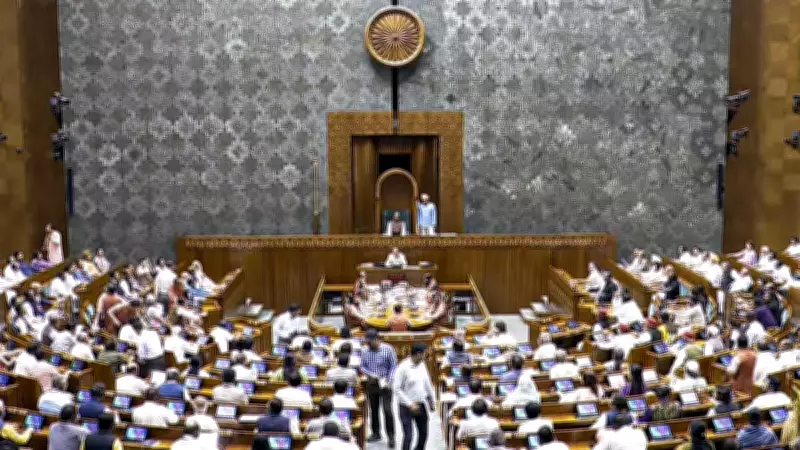
The Constitution of India grants Parliament and state legislatures the power to define their own privileges by law, yet this power has never been exercised. This inaction has led to legal ambiguity and potential conflicts between legislative bodies and the judiciary, experts argue.
Constitutional Mandate Unfulfilled
Article 105 of the Indian Constitution empowers Parliament to define its privileges, while Article 194 does the same for state legislatures. However, since Independence, neither body has enacted a law codifying these privileges. Instead, they rely on a patchwork of precedents and temporary rules.
This lack of codification means that many privileges remain as they existed in the British House of Commons at the time of the Constitution's adoption, which has led to uncertainty in modern contexts.

Recent Controversies Highlight the Problem
In recent years, several incidents have underscored the need for codification. For example, in 2023, the Maharashtra Legislative Assembly issued a breach of privilege notice against a journalist for alleged misrepresentation of proceedings. The case dragged on for months, raising questions about the scope of legislative privilege and the rights of citizens.
Similarly, in 2025, the Lok Sabha Secretariat summoned a social media influencer for posting critical comments about a member of Parliament. The influencer faced potential imprisonment, sparking debates about freedom of speech versus parliamentary privilege.
Legal Experts Call for Clarity
Constitutional law expert Dr. Rajeev Dhavan stated: "The current situation is untenable. Without codified privileges, there is no clear boundary between what a legislature can punish as contempt and what is protected speech under Article 19." He added that the Supreme Court has repeatedly urged legislatures to codify their privileges, but no action has been taken.
According to a 2024 report by the Parliamentary Standing Committee on Law and Justice, at least 15 breach of privilege cases were pending in various state legislatures, with some dating back over five years. The committee recommended immediate codification to ensure due process and prevent misuse.
Impact on Governance and Judiciary
The ambiguity also strains the relationship between the legislature and the judiciary. In the landmark case of Kashinath G. Jalmi v. The Speaker (1993), the Supreme Court held that the courts can review legislative privileges if they violate fundamental rights. However, the scope of such review remains contested.
Former Chief Justice of India S.A. Bobde remarked: "Codification would not only protect the rights of citizens but also strengthen the institution of Parliament by providing clear rules of conduct."
Comparative Perspective
Other democracies have addressed this issue. The United Kingdom, from which India inherited its parliamentary system, codified many privileges in the Parliamentary Standards Act 2009 and subsequent reforms. Australia and Canada have also enacted legislation defining the powers of their legislatures.
India's failure to codify leaves it as an outlier among major Commonwealth nations. The Law Commission of India, in its 267th Report (2018), recommended a comprehensive law on legislative privileges, but the proposal has not been taken up by Parliament.
Urgent Need for Action
With increasing clashes between legislatures and citizens over social media posts, news articles, and public statements, the need for codification has become urgent. Without a clear legal framework, legislatures risk being seen as arbitrary, while citizens face uncertainty about their rights.
As the 2026 monsoon session approaches, civil society groups are petitioning Parliament to prioritize a Bill on legislative privileges. The demand is bipartisan, with members from both the ruling coalition and opposition supporting the move.
In conclusion, codifying legislative privileges is not just a legal necessity but a democratic imperative. It would bring India's parliamentary practice in line with constitutional intent and modern governance standards.






