

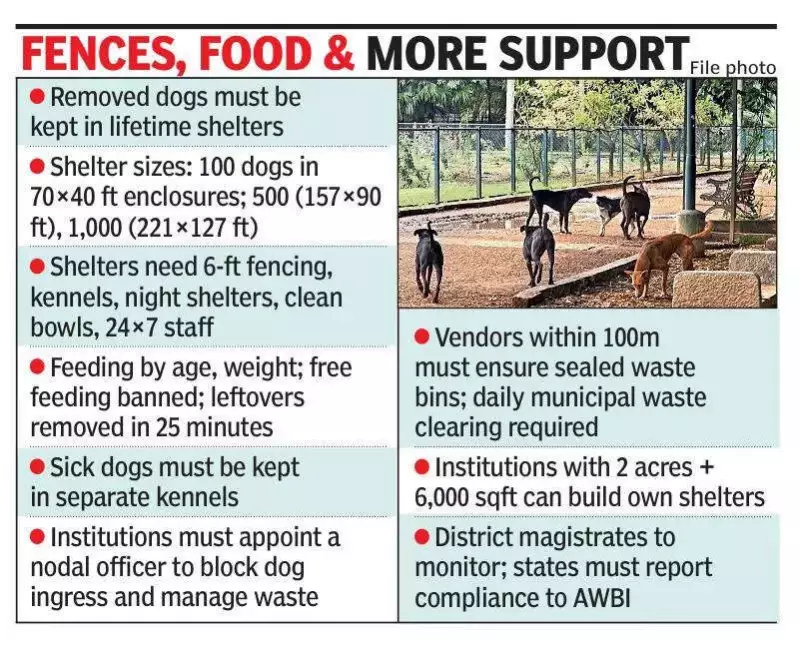
In a significant move for animal welfare, India has introduced stringent nationwide protocols for the management of stray dogs in institutional zones. The Animal Welfare Board of India (AWBI) has issued binding Standard Operating Procedures (SOPs) that mandate lifetime shelter and care for any stray dog removed from areas like schools, hospitals, and transport hubs.
Key Directives of the New Care Protocol
The SOPs, applicable to all states and Union Territories, were formulated following Supreme Court directions in November 2025. The court had sought a uniform national protocol amid concerns over rising dog-bite incidents. A core rule prohibits releasing captured dogs back into their original localities. Instead, they must be transferred to registered shelters operated by municipalities or NGOs, not private facilities.
Every removed dog will undergo compulsory sterilisation, with male dogs and puppies older than six months receiving priority. Post-surgery, the animals must be given annual anti-rabies vaccinations for a minimum of five years or until protective immunity is established.

Infrastructure and Daily Care Standards
The guidelines specify detailed infrastructure requirements for care facilities. Each shelter must have kennels, night shelters, open enclosures, and a 6-foot boundary fence. Essential amenities include adequate water points and 24x7 staffing with cleaners, caretakers, a watchman, and a record-keeper.
Feeding norms are meticulously outlined to ensure nutritional adequacy for different age groups. Newborn puppies up to two months must be fed four to six small meals daily, while adult dogs are to be fed twice a day.
Responsibilities of Institutions and Municipal Bodies
The SOPs place clear duties on various institutions. Schools, hospitals, railway stations, sports complexes, tourist sites, and religious places are required to install 6-foot fencing, appoint nodal officers, and coordinate with municipal bodies for the immediate removal and transfer of stray dogs to shelters.
Concurrently, municipal bodies have been tasked with conducting daily garbage clearance and enforcing rules to prevent the feeding of dogs near vendor areas, which is seen as a major attractant.
The Supreme Court is actively monitoring compliance with these protocols. District magistrates have been directed to submit periodic reports to the AWBI, ensuring the directives translate into on-ground action.






