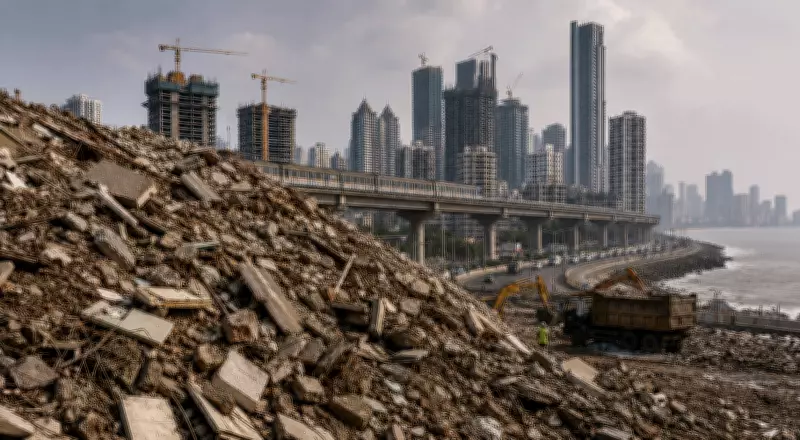
Mumbai is grappling with a massive debris problem as its construction boom generates approximately 8,000 metric tonnes of construction and demolition waste every day. This staggering figure surpasses the city's daily household garbage output of roughly 7,000 metric tonnes, according to civic body estimates.
The Scale of the Debris Crisis
The stark comparison underscores the intensity of Mumbai's urban transformation, where buildings are being pulled down, land dug up, and infrastructure rebuilt at an unprecedented pace. The 8,000-tonne daily debris load includes concrete, bricks, wood, metal, and other materials from demolition sites, new construction projects, and road repairs.
Impact on Waste Management
This volume of construction and demolition waste poses significant challenges for the city's waste management system. Unlike household garbage, which is largely organic and can be processed in landfills or composting plants, construction debris is heavy, bulky, and often contains hazardous materials like asbestos or lead-based paint. Proper disposal requires specialized facilities for crushing, recycling, and safe handling.

The civic body has been struggling to keep up with the debris influx. Recycling rates remain low, with only a fraction of the waste being processed into reusable aggregates or other materials. Much of the rubble ends up in illegal dumping sites, clogging drainage systems and polluting water bodies.
Environmental and Health Consequences
The unchecked debris contributes to air pollution through dust particles, which can cause respiratory issues for residents. It also increases the risk of landslides during monsoon season, as loose rubble accumulates on hillsides. Additionally, illegal dumping in mangroves and wetlands threatens Mumbai's fragile ecosystem.
Government Initiatives
To address the crisis, the municipal corporation has proposed setting up more debris processing plants and enforcing stricter penalties for illegal dumping. Some developers have started adopting green demolition practices, segregating waste at source, and using recycled materials in new construction. However, experts argue that these efforts are insufficient without a comprehensive city-wide policy and public awareness campaigns.
The problem is expected to worsen as Mumbai continues its rapid redevelopment under various infrastructure projects, including the coastal road, metro lines, and slum rehabilitation schemes. Without immediate intervention, the city risks being buried under its own debris.