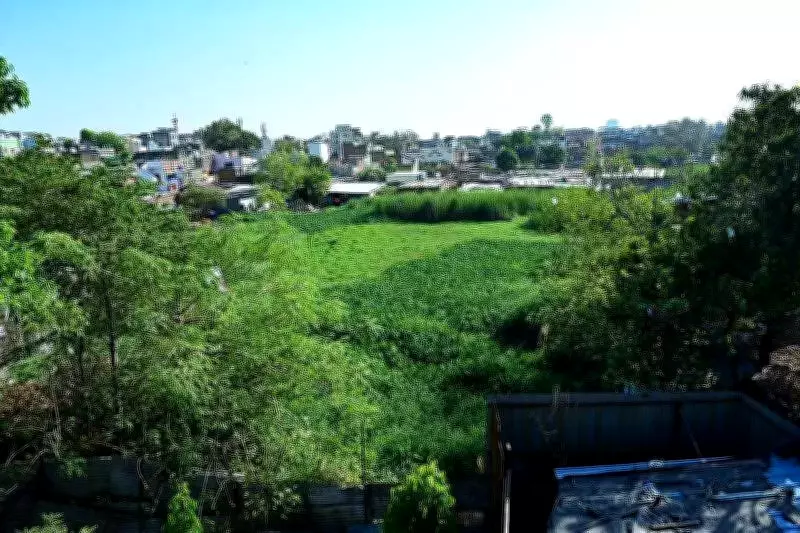
The Nagpur bench of the Bombay High Court last week took suo motu cognisance of media reports highlighting the disappearance and degradation of lakes across Nagpur city. The court warned that the shrinking water bodies raise serious environmental and constitutional concerns linked to citizens' right to clean water and a healthy environment.
Suo Motu PIL Initiated
A division bench comprising Justices Anil Kilor and Raj Wakode converted media reports published in the Times of India into a suo motu public interest litigation after noting the grave environmental concern and public interest involved in the matter.
Ecological Significance of Nagpur Lakes
The court observed that Nagpur's lakes have historically played a crucial ecological role by maintaining environmental balance, supporting biodiversity, recharging groundwater, and regulating the city's microclimate. The bench noted that the lakes also acted as natural flood buffers and important open ecological spaces amid rapid urbanisation.

Disappearance of Lakes from Official Records
Referring to information obtained under the Right to Information Act by social activist Abhay Kolarkar, the court recorded that Sanjay Gandhi Lake and Dobi Lake effectively disappeared from the official inventory of the Nagpur Municipal Corporation. The civic body's records now recognise only 11 surviving lakes within city limits. The surviving lakes listed in municipal records include Ambazari, Futala, Sonegaon, Pandharabodi, Police Line Takli, Binaki Mangalwari, Naik, Gorewada, Sakkardara, Lendi Talao and Gandhi Sagar lakes. The court further noted that only five of these lakes currently remain under the jurisdiction of NMC, while others are controlled by different government agencies.
Fragmented Ownership and Accountability Issues
The bench observed that fragmented ownership and administrative control contributed to the lack of accountability and coordinated conservation efforts, accelerating deterioration of the lakes.
Constitutional and Legal Framework
Citing Supreme Court rulings in Subhash Kumar versus State of Bihar and Indian Council for Enviro-Legal Action versus Union of India, the court said degradation of water bodies directly affects public health, environmental quality and access to clean water, thereby attracting constitutional protection under Article 21.
Directions Issued by the Court
Instead of issuing notices immediately, the court granted an opportunity to the Nagpur district collector and municipal commissioner to examine the issue and initiate corrective measures. Both authorities have been directed to conduct an inquiry and submit an action taken report before the Registrar (Judicial) within four months. The court disposed of the SMPIL with directives for urgent conservation measures to protect the city's remaining lakes from further decline.

Key Highlights of the Case
- Only 11 lakes officially survive within city limits according to municipal records.
- Sanjay Gandhi Lake and Dobi Lake have vanished from official civic records.
- RTI disclosures reveal the drastic reduction in the number of lakes.
- The court noted lakes are vital for groundwater recharge, biodiversity and flood control.
- Judges flagged fragmented control of lakes by multiple agencies as a major problem.
- The court linked lake degradation to citizens' right to clean water under Article 21.
- The collector and NMC commissioner have been directed to conduct an inquiry and take corrective steps.
- Authorities must submit an action taken report within four months.
- The case was disposed of after directions, without issuing notices at this stage.