

Maharashtra Opposition Condemns NCERT Over Maratha Empire Map Removal
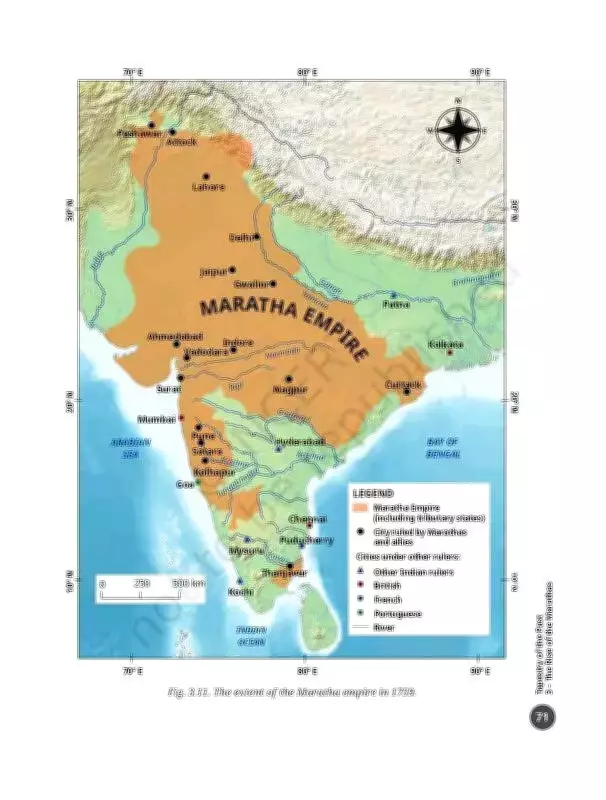
Opposition politicians in Maharashtra have launched sharp criticism against the National Council of Educational Research and Training (NCERT) for allegedly removing the 'Maratha Empire' map from the Standard VIII social science textbook. The textbook, titled Exploring Society: India and Beyond — Part I, is scheduled for use in the 2026-27 academic year, and the controversy has sparked widespread debate about historical representation in educational materials.
Historical Context and Political Outcry
NCERT, which develops, publishes, and revises textbooks for Standards I through XII, forms the core curriculum for CBSE-affiliated schools across India. The opposition members highlighted that the map, specifically Figure 3.11 on page 71, previously appeared in the Hindi, Urdu, and English editions of the textbook. Sambhajiraje Chhatrapati, a former Rajya Sabha member and descendant of Chhatrapati Shivaji Maharaj, expressed strong condemnation in a post on his official X handle.
"Historians have demonstrated that the Maratha Empire extended from Attock to Cuttack. The sudden elimination of the map and the Maratha Empire from the curriculum is utterly condemnable. This appears to be a deliberate attempt to erase the glorious history of the Marathas," he stated, emphasizing the significance of this historical period.

Background of the Controversy
The issue traces back to August of last year when BJP politicians from Rajasthan and representatives of erstwhile royal families petitioned the Union education ministry. They argued that the map on page 71 inaccurately depicted Rajput states such as Jaisalmer, Mewar, and Bundi as part of the Maratha Empire, claiming historical inaccuracies. In response, NCERT removed the map from the Hindi and Urdu textbooks, though it remained in the English version available online.
A footnote in the Hindi and Urdu editions indicated, "A new version of Figure 3.11 will be provided in the next edition of this textbook." However, the books have not yet been circulated, leaving the matter unresolved and fueling further controversy.
Political Reactions and Allegations
Shiv Sena (UBT) MP Omprakash Rajenimbalkar also took to social media to condemn the move, suggesting it was influenced by external pressure. "We suspect this decision was made under pressure from Rajasthan's royal families and the BJP government there. Historical records, including the 1752 Ahmednagar treaty, British Gazetteer, and Rajputana Gazetteer, clearly document Maratha influence in Rajasthan," he posted on X.
He further criticized NCERT for its lack of transparency, noting, "NCERT's failure to provide satisfactory responses to our Right to Information (RTI) queries is a blatant violation of transparency principles."
Calls for Review and Reinstatement
NCP (SP) MP Amol Kolhe expressed anger over the omission, urging a review based on objective historical evidence. "The decision must be reassessed using factual historical data. Records clearly indicate that Marathas exercised influence over major princely states like Jaipur and Jodhpur, collecting chauth (tax) from these regions. The map should be reinstated to ensure future generations receive accurate historical knowledge," he stated in a social media post.
Adding to the chorus of dissent, Raje Mudhoji Bhonsle, descendant of Shrimant Raje Raghuji Bhonsle and head of the Bhonsle family in Nagpur, declared his commitment to the cause. "We will not retreat from the fight we have initiated against NCERT. I plan to meet with concerned authorities soon to advocate for the map's reinstatement in the textbook," he posted on his social media handle.
NCERT's Response and Ongoing Inquiry
When contacted for comment, TOI reached out to NCERT via its official email and sent a message to NCERT director Dinesh Prasad Saklani regarding the claims made by Maharashtra politicians. As of the time of reporting, no response had been received from NCERT, leaving the issue open and intensifying the political and educational debate.

The controversy underscores broader concerns about historical accuracy and representation in India's educational curriculum, with stakeholders calling for greater transparency and evidence-based decision-making in textbook revisions.





