

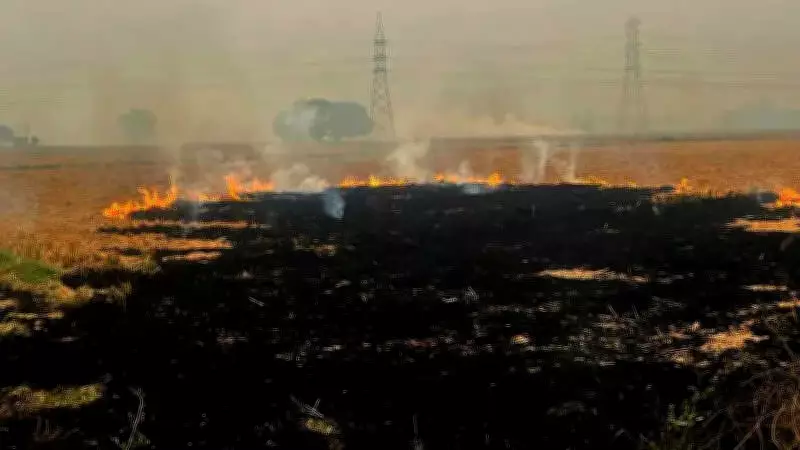
Punjab's Stubble Burning Count Remains Dramatically Lower Than Leading State
Bathinda: Punjab's crop residue burning incidents continue to be remarkably low, with the state's total count standing at just 10 cases as of Saturday. This figure is nearly 1,700 times lower than the state with the highest number of stubble burning incidents, according to official data. Two fresh cases were reported on Saturday, contributing to this minimal tally.
Officials Attribute Low Numbers to Slower Wheat Harvesting
State officials have pointed to slower wheat harvesting activities in Punjab as a primary reason for the exceptionally low number of stubble burning incidents this season. The delayed agricultural schedule appears to have significantly reduced the practice of crop residue burning, which is typically more prevalent during peak harvesting periods.
National Stubble Burning Data Reveals Stark Disparities
Across five major agricultural states, a total of 1,311 stubble burning cases were recorded on Saturday alone. This has pushed the current season's cumulative tally to 24,161 incidents. The data reveals a striking concentration of cases, with the worst-affected state accounting for 17,318 incidents – representing over 71% of all reported cases so far this season.

Historical Data Shows Persistent Trends
Data from the Consortium for Research on Agroecosystem Monitoring and Modeling From Space (CREAMS), which systematically tracks stubble burning following both paddy and wheat harvests, indicates that these patterns have persisted over multiple years. Between 2022 and April 18, 2026, the top state recorded 112,004 cases out of a total of 222,770 incidents across the monitored regions.
The historical breakdown shows Uttar Pradesh following with 52,794 cases, Punjab with 47,987 incidents, Haryana with 9,796 cases, and Delhi recording just 119 stubble burning incidents during this period.
Geographic Concentration of Stubble Burning Incidents
This season, Siddharthnagar district in Uttar Pradesh has reported the highest number of individual cases at 2,717 incidents. Furthermore, 34 districts across the two most severely affected states have each recorded over 100 stubble burning incidents, indicating concentrated geographic hotspots for this agricultural practice.
Previous Season Patterns Mirror Current Trends
During the 2025 kharif season, similar patterns emerged with the same state leading in stubble burning cases at 17,067 incidents. Uttar Pradesh followed with 7,290 cases, while Punjab recorded 5,114 incidents during that period. The consistency of these rankings across seasons suggests established regional patterns in crop residue management practices.
The monitoring of stubble burning remains crucial as agricultural authorities continue to address the environmental impacts of crop residue management while balancing the practical needs of farming communities across different states.






