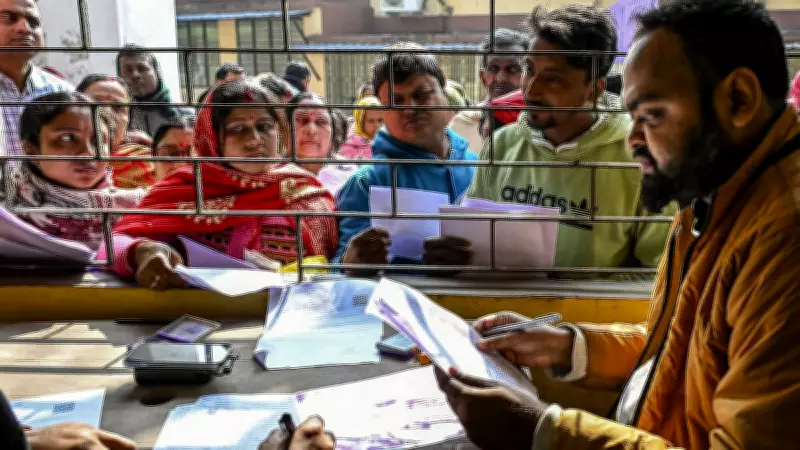
The Supreme Court has ruled that the Election Commission (EC) can conduct a limited probe into citizenship status for the purpose of updating electoral rolls, but it cannot make a final adjudication on citizenship. The judgment came in response to a petition challenging the EC's powers during the special intensive revision of electoral rolls.
Key Observations
Referring to Section 16 of the Representation of the People Act, 1950, the top court emphasized that citizenship is a condition precedent for enrolment as a voter. The court clarified that while the EC has the authority to scrutinize claims and objections regarding entries in electoral rolls, it does not have the jurisdiction to conclusively determine citizenship. Such a determination rests solely with competent courts or tribunals under the Citizenship Act.
Limited Inquiry Permissible
The bench observed that the EC may undertake a limited inquiry to ascertain if a person is a citizen for electoral purposes, but this is not equivalent to a final adjudication. The commission can rely on available documents and evidence to decide whether to include or exclude a name from the rolls. However, if a dispute arises regarding citizenship, the matter must be referred to the appropriate authority.

Implications for Electoral Rolls
The ruling is expected to impact the ongoing special intensive revision of electoral rolls in several states. It provides clarity on the extent of the EC's powers and prevents potential overreach. The court also noted that the EC must follow principles of natural justice and give individuals an opportunity to be heard before any adverse action is taken.
Legal experts have welcomed the judgment, stating that it strikes a balance between maintaining accurate electoral rolls and protecting the rights of individuals. The decision reaffirms that the EC's role is administrative and not quasi-judicial in matters of citizenship.