South Delhi's Traffic Relief Plan Gets Green Signal
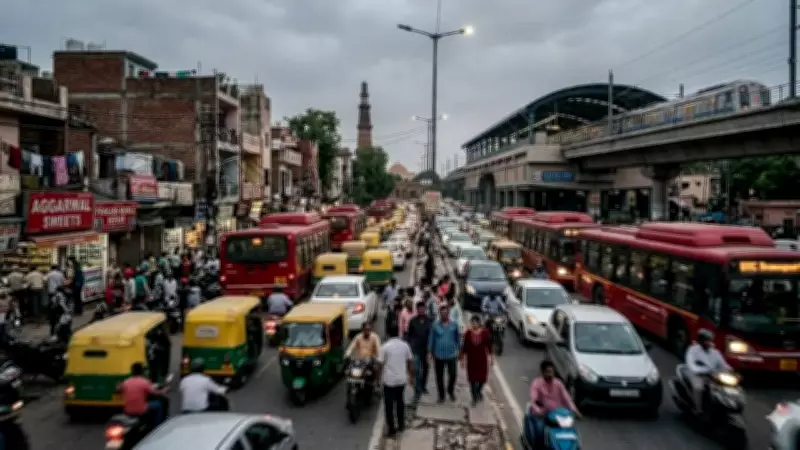
The Delhi government has approved a 4-kilometer elevated corridor aimed at alleviating chronic congestion in south Delhi. The project will be constructed along Sant Shri Nagpal (SSN) Marg in Chhatarpur. Officials stated that the corridor is designed to separate through traffic from local movement, significantly improving travel efficiency. (AI-generated images used for representation purposes only)
Where the Elevated Corridor Will Run
The corridor will commence near the intersection of Anuvrat Marg (NH-148A) and SSN Marg. It will pass close to the Qutub Minar Metro Station and extend toward Fatehpur Beri. The route traverses the Chhatarpur urban belt, serving as a key connector for south Delhi commuters. (AI-generated images used for representation purposes only)
Travel Time to Drop Sharply
Currently, commuters take approximately 18.9 minutes to cross the stretch. Once operational, travel time is expected to reduce to just 6.6 minutes. This represents a major improvement for daily users of the corridor. Officials believe faster movement will ease peak-hour stress. (AI-generated images used for representation purposes only)

Speed Set to Triple During Peak Hours
The average vehicle speed on the stretch is currently about 12.7 kmph. After completion, speeds are expected to rise to 36.4 kmph. Nearly 90% of traffic movement on the corridor will become signal-free, reducing frequent stoppages at intersections. (AI-generated images used for representation purposes only)
Heavy Daily Traffic to Shift Upward
Around 82,819 passenger car units (PCUs) use the corridor daily. Of these, nearly 74,370 PCUs are expected to move onto the elevated road. This shift will ease pressure on surface roads. Officials say congestion at key junctions will reduce significantly. (AI-generated images used for representation purposes only)
Areas That Will Benefit the Most
The corridor serves commuters from Mehrauli, Chhatarpur, and Fatehpur Beri. It also connects rapidly growing areas like Satbari, Jonapur, Dera Mandi, and Asola. Localities such as Saket and nearby residential zones will benefit. Improved access is expected for settlements along the southern ridge. (AI-generated images used for representation purposes only)
Boost for Metro and Road Integration
The corridor passes close to Qutub Minar Metro Station. Officials say smoother road access will strengthen metro connectivity. The project is expected to improve last-mile travel. Authorities believe it will enhance public transport integration. (AI-generated images used for representation purposes only)
Fuel Savings and Environmental Gains
Smoother traffic flow is expected to reduce fuel consumption. Higher speeds and less idling will lower emissions. Officials estimate annual fuel savings of about ₹38 crore. The project aims to deliver long-term efficiency benefits. (AI-generated images used for representation purposes only)
Cost and Construction Timeline
The elevated corridor is estimated to cost around ₹700 crore. Tenders are expected to be floated soon. Officials stated the project will be completed in about one-and-a-half years. Work will focus on enhancing existing road capacity. (AI-generated images used for representation purposes only)
A Key Step Towards Jam-Free South Delhi
Authorities say the corridor will improve intersection performance. It is designed to handle rising traffic demand in the Chhatarpur region. Rapid urbanization over the past decade prompted the project. The elevated road is seen as a crucial mobility upgrade for south Delhi. (AI-generated images used for representation purposes only)