Andhra Pradesh Government Announces Major Revenue Sharing Initiative for Gram Panchayats
In a landmark decision aimed at strengthening grassroots governance and rural infrastructure, the Andhra Pradesh state government has unveiled a comprehensive revenue sharing framework for funds collected under the Layout Regularisation Scheme (LRS) and Building Penalisation Scheme (BPS). This strategic move is designed to provide a substantial financial boost to gram panchayats across the state.
New Revenue Distribution Formula
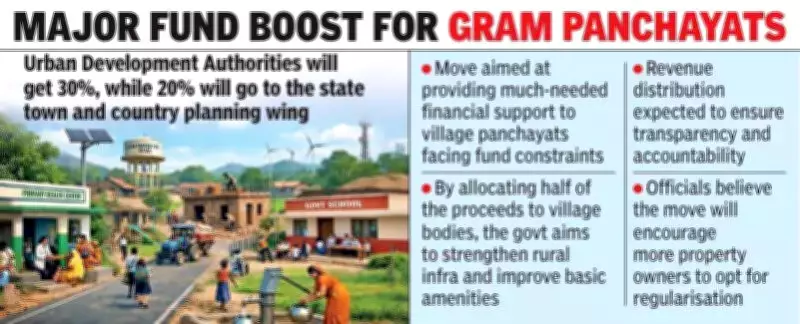
Under the newly established formula, gram panchayats will receive a significant 50% share of all revenues collected within their respective jurisdictions from the LRS and BPS programs. The remaining funds will be distributed among other key urban development bodies:
- Urban Development Authorities (UDAs): 30% allocation
- State Town and Country Planning Wing: 20% allocation
This structured approach ensures that funds generated from property regularisation are reinvested directly into the areas where they originate, creating a sustainable financial model for local development.
Addressing Financial Constraints in Rural Areas
The decision comes at a critical time when many gram panchayats face severe financial limitations that hinder their ability to execute essential development works. Principal Secretary for Municipal Administration and Urban Development, S. Suresh Kumar, emphasized that this initiative reflects the government's strong commitment to empowering local bodies and strengthening rural infrastructure.
"By allocating half of the proceeds to gram panchayats, we aim to transform rural areas through improved basic amenities and infrastructure development," Kumar stated.
Currently, numerous village panchayats struggle to undertake even routine sanitation work and depend heavily on finance commission grants, which are typically earmarked for specific purposes and often insufficient for comprehensive development projects.
Expected Impact on Rural Development
With this steady inflow of LRS and BPS revenues, village bodies are expected to address long-pending development works that have been delayed due to financial constraints. Key areas that will benefit include:
- Internal road construction and maintenance
- Drainage system improvements
- Street lighting installations
- Drinking water supply enhancements
- Sanitation and waste management projects
Transparency and Planned Development
Government sources indicate that this structured revenue distribution will enhance transparency and accountability in fund utilization. The Urban Development Authorities will utilize their 30% share for planned urban expansion initiatives, while the town and country planning wing will allocate its 20% portion toward comprehensive urban planning efforts.
A senior official involved in the decision-making process revealed, "This decision followed several rounds of extensive discussions with stakeholders, particularly legislators who have been pressing for a fair share of revenues for village panchayats."
Encouraging Property Regularization
Officials believe this revenue sharing model will create a positive incentive for property owners to come forward for regularization under the LRS and BPS schemes. Knowing that collected funds will directly benefit local development projects is expected to increase participation in these programs.
By linking revenue generation with grassroots infrastructure growth, the Andhra Pradesh government aims to establish a sustainable model for balanced rural and urban development that addresses the unique needs of both sectors while promoting overall economic growth and improved quality of life for residents across the state.