Assam Chief Minister Showcases Development Project Amid Political Firestorm
Assam Chief Minister Himanta Biswa Sarma has taken to social media platform X to showcase the newly inaugurated Sati Radhika Shaanti Udyan riverfront park in Guwahati, framing it as evidence of the state's improving quality of life. The Rs 327-crore project, formally opened by Union Finance Minister Nirmala Sitharaman, features extensive walkways, dedicated cycling tracks, and expansive open spaces along the banks of the Brahmaputra River.
Economic Growth Claims and Development Narrative
In his post, Sarma posed a rhetorical question about superlative quality of life, suggesting that the people of Assam could provide the best answer. He emphasized that Assam has transformed from a dependent state to one that actively contributes to the national economy. The Chief Minister revealed that Assam's economy has surpassed Rs 7 lakh crore and projected it would reach Rs 10 lakh crore by 2028, describing this trajectory as a "turnaround never imagined" and heralding the emergence of a "new Assam."
Police Search for Congress Leader
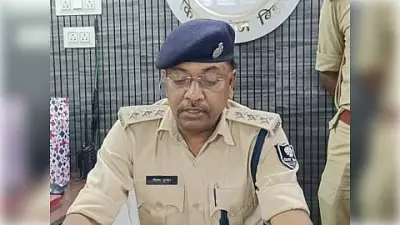
Hours after Sarma's social media post, an Assam Police team arrived at the Delhi residence of Congress leader Pawan Khera in the Nizamuddin area but found him absent. Police officials stated that Khera had "fled to Hyderabad," a claim that Chief Minister Sarma attributed to media reports. A senior police officer declared, "We will trace him wherever he is," noting that electronic devices were seized during the search operation. Police also reported recovering some "incriminating material," though specific details were not disclosed to the public.

Background of the Allegations
The police action follows the registration of a First Information Report (FIR) in Guwahati after Khera and Assam Congress chief Gaurav Gogoi made allegations against Chief Minister Sarma's wife, Riniki Bhuyan Sharma. The opposition leaders claimed she held multiple foreign passports and owned overseas assets, including properties in Dubai and connections to US-based entities. Sarma has vehemently dismissed these allegations as "AI-generated fake documents" and accused Khera of making baseless claims. The Chief Minister remarked, "He had dared Assam Police to arrest him... now he has run away. The law will take its own course."
Political Reactions and Accusations
The police search triggered sharp political exchanges between the ruling Bharatiya Janata Party (BJP) and the opposition Congress party. The BJP asserted that individuals making "fake allegations" about the citizenship status of a chief minister's spouse must face legal consequences. In contrast, Congress labeled the police action a "witch hunt," accusing the Chief Minister of utilizing state machinery to silence opposition voices.
Senior Congress leader Jairam Ramesh criticized what he described as the deployment of a "full army of police officials," suggesting this demonstrated the Chief Minister was "rattled" by questions raised in public interest. Ramesh alleged the action was intended to "muzzle" political opposition. Meanwhile, Raijor Dal chief Akhil Gogoi called for a Central Bureau of Investigation (CBI) probe into the allegations, accusing the Chief Minister of deflecting questions rather than providing direct responses.
Election Context and Silence Period
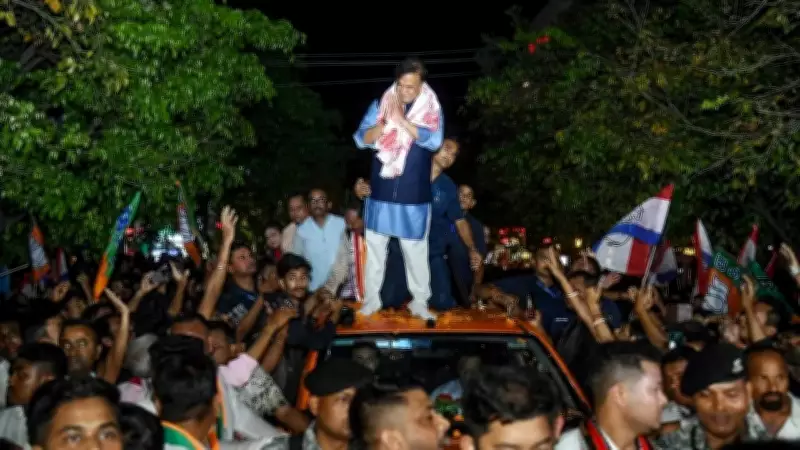
These developments unfold on the eve of polling in Assam, with the Election Commission of India announcing the commencement of the mandatory 48-hour silence period under Section 126 of the Representation of the People Act. During this period, all campaigning activities, political rallies, and political messaging across media platforms are strictly prohibited. Authorities have been directed to ensure rigorous compliance with these regulations.
Polling in Assam will be conducted in a single phase on April 9, with results scheduled for announcement at a later date. The timing of these events creates a charged atmosphere as voters prepare to cast their ballots.

Contrasting Narratives: Development Versus Controversy
The simultaneous presentation of Chief Minister Sarma's development narrative—centered on infrastructure projects, investment, and economic growth—alongside the escalating political and legal confrontation highlights the high-stakes environment preceding the elections. While the state government promotes a vision of a "new Assam" characterized by enhanced infrastructure and expanding economy, opposition parties continue to press questions about corruption and governmental transparency.
This juxtaposition sets the stage for a heated electoral contest where development achievements and allegations of impropriety will likely dominate political discourse. The riverfront park project, intended as a symbol of progress and improved quality of life, now exists within a broader context of political conflict and legal proceedings that may influence voter perceptions as the election approaches.