Evicted Assam Voters Threaten to Boycott April 9 Polls Over Land Settlement Demand
In a significant development ahead of the upcoming elections, more than 6,000 electors evicted from the Lutumari Reserve Forest in Assam have issued a stern warning: they will boycott the polls scheduled for April 9 unless they are allotted land beforehand. These voters, currently enrolled in the Hojai assembly constituency, were displaced in November last year and are now living in precarious conditions, highlighting a critical issue of displacement and rehabilitation in the region.
Background of the Eviction and Current Living Conditions
The eviction drive targeted over 1,200 Bengali-speaking Muslim families who were allegedly occupying nearly 6,000 bighas, approximately 800 hectares, of the Lutumari Reserved Forest. According to official sources, the forest was notified over a century ago, but these families had been residing there for decades, with many having settled in the area as far back as 1983.
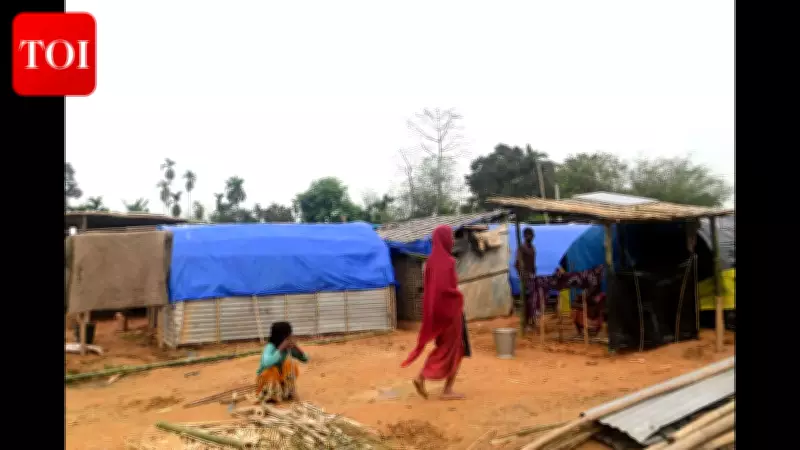
Since their eviction, these families have been forced to live in makeshift tarpaulin shelters along a village road at Chankhula, which falls under the Kampur revenue circle and Barhampur assembly constituency. Chankhula is located about 8 kilometers from the original eviction site, adding to the hardships faced by the displaced individuals.

Historical Context and Personal Accounts
Abdul Hameed, a 115-year-old resident, provided insight into the historical backdrop of this displacement. He explained that most families had originally settled in No.-2 Majgaon inside the Lutumari Reserve Forest in 1983, fleeing their earlier homes in Barpeta district, Morigaon, and parts of Nagaon district to escape the violence during the six-year anti-foreigner movement from 1979 to 1985. "Over the years, people sold off their earlier land holdings, whoever had them. As a result, none of the evicted families owns land elsewhere in the state," Hameed stated, emphasizing their complete reliance on the forest land.
Rashid Ali, 47, shared his personal experience, recalling how he moved from Barpeta to No.-2 Majgaon as a young child to escape the Assam Movement violence. "We have land revenue receipts dating back to 2006-07, after the revenue department allowed us to pay revenue. Around 800 families lived in 2 No. Majgaon. Of them, nearly 200 families are now surviving in makeshift shelters at Chankhula, while others have dispersed to nearby areas or migrated elsewhere," he recounted, painting a picture of widespread disruption.
Administrative and Political Challenges
The district administration carried out the eviction, stating that the area falls under Longjap gaon panchayat and is a revenue village under the Barhampur constituency after the 2023 delimitation. However, this has created a bureaucratic and political dilemma, as the evicted families are enrolled in the Hojai constituency. "Unfortunately, no political party has come forward to listen to our story. We have been left on the streets to die like cockroaches," Ali lamented, highlighting the lack of political support and attention to their plight.
Adding to their woes, over 300 children from the evicted families have not attended school since the eviction. Both the venture school and government school at the site were shut down, with their materials destroyed, and the forest department now occupies those buildings, further exacerbating the educational crisis for the younger generation.
Demands and Economic Impact
The primary demand of the evicted electors is clear: they seek settlement on alternative land. "They evicted us, saying it was forest land — we have no objection. But allot us land so families, including the elderly and children, can live with dignity. This must be done before polling on April 9, otherwise we will never get any settlement," Ali asserted, linking their voting participation directly to the resolution of their land issue.
The economic impact of the eviction has been severe. Md Nuruddin, 43, reported that families were forced to sell cattle and poultry at throwaway prices post-eviction. "A cow that fetched Rs 40,000 earlier sold for Rs 20,000. We had no choice," he said, urging authorities to resolve their displacement issue at the earliest to prevent further economic hardship.

Conclusion and Call to Action
As the April 9 polls approach, the threat of a boycott by over 6,000 voters in the Hojai constituency underscores a pressing humanitarian and political challenge in Assam. The evicted families, with their decades-long history in the region, are calling for urgent action on land settlement to ensure their basic rights and dignity. Their situation serves as a stark reminder of the complexities surrounding forest land disputes and the need for compassionate governance in addressing displacement issues.