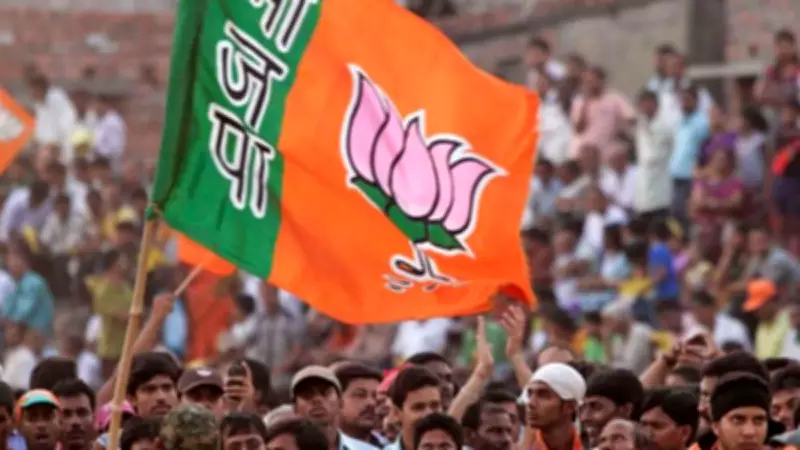
In a significant political shift ahead of the 2026 West Bengal Assembly elections, the Bharatiya Janata Party (BJP) has managed to pierce the core turf of the Trinamool Congress (TMC) in South Bengal. This region, long considered an impregnable fortress for the ruling party, is now witnessing a changing political landscape as the BJP makes strategic inroads.
BJP's Grassroots Strategy Pays Off
The BJP's success in South Bengal can be attributed to its focused grassroots outreach and organizational expansion. Over the past few years, the party has invested heavily in strengthening its booth-level presence, particularly in rural and semi-urban areas. This has allowed it to connect with voters who were previously unreachable by the party's cadre.
Political analysts point to several factors driving this shift. Anti-incumbency sentiment against the TMC government, coupled with allegations of corruption and administrative failures, has eroded the party's support base. Additionally, the BJP has effectively leveraged national issues, such as the Citizenship Amendment Act (CAA) and the National Register of Citizens (NRC), to polarize voters in its favor.

TMC's Response and Counter-Strategies
The TMC, led by Chief Minister Mamata Banerjee, has not remained passive. The party has launched a series of welfare schemes and development projects aimed at retaining its core voters. However, the BJP's sustained campaign appears to be yielding results, as evidenced by the party's improved performance in local body elections and by-polls in the region.
The upcoming assembly elections are crucial for both parties. For the TMC, retaining South Bengal is essential to maintain its dominance in the state. For the BJP, a strong showing here could pave the way for a broader victory across West Bengal.
Key Factors Behind the Shift
- Anti-Incumbency: Long-term dissatisfaction with the TMC's governance, particularly in areas like law and order, infrastructure, and employment.
- Organizational Strength: The BJP's disciplined cadre and efficient use of technology for voter outreach have given it an edge.
- Social Alliances: The BJP has successfully built coalitions with various social groups, including OBCs and Dalits, who feel marginalized by the TMC's policies.
- National Narrative: The party's focus on nationalism and cultural identity resonates with a section of the electorate.
Challenges Ahead for BJP
Despite its gains, the BJP faces significant hurdles in South Bengal. The TMC's deep-rooted patronage networks and control over local institutions remain formidable. Moreover, the BJP's reliance on national issues may not be sufficient to overcome local concerns about unemployment and inflation.
Another challenge is the presence of multiple opposition parties, including the Left Front and the Congress, which could split anti-TMC votes. The BJP will need to carefully manage its alliances and candidate selection to maximize its electoral prospects.
Looking Forward to 2026
As the 2026 elections draw nearer, both parties are expected to intensify their campaigns. The BJP's breakthrough in South Bengal marks a turning point in the state's politics, but it remains to be seen whether the party can convert this momentum into a full-fledged victory. For the TMC, the focus will be on damage control and reinvigorating its base.
Political observers believe that the final outcome will depend on how effectively each party addresses the core concerns of the electorate, including development, governance, and social justice. South Bengal, once a TMC bastion, is now a battleground where the future of West Bengal's politics will be decided.