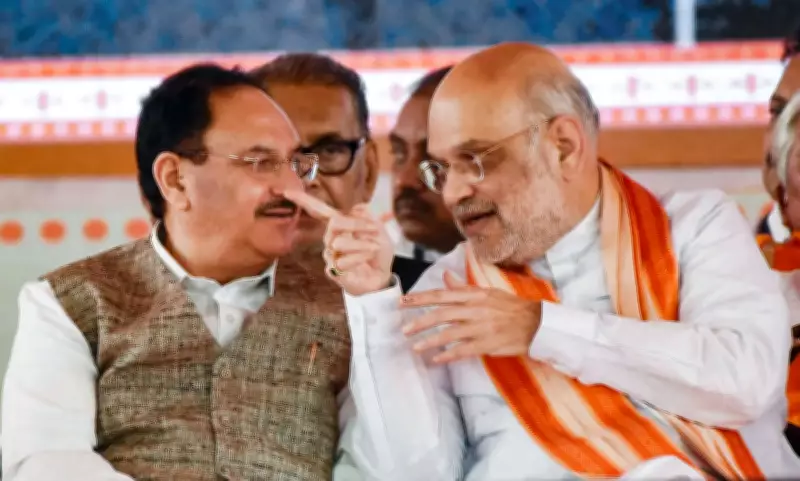
The induction of 32 new ministers into the council of ministers headed by Chief Minister Samrat Choudhary at Gandhi Maidan on Thursday turned into a major exercise in political and social messaging by the BJP, aimed at audiences in Bihar and beyond. With Prime Minister Narendra Modi, Union Home Minister Amit Shah, Defence Minister Rajnath Singh, BJP National President Nitin Nabin, and former party president J P Nadda attending the ceremony, the NDA sought to project the BJP’s growing political dominance and expanding national reach.
Political Significance of the Event
The event came ahead of the swearing-in ceremonies of BJP governments in West Bengal and Assam after the party registered a historic victory in Bengal and retained power in Assam despite a tough challenge from the Congress. The presence of the BJP’s top leadership at Gandhi Maidan gave the event added political significance and strengthened the optics around the transition of power in Bihar.
Social and Regional Balancing
The ceremony also carried a strong message for Bihar’s caste and regional equations. Representation from social blocs and cultural regions remained central to the cabinet formation. The Ang region emerged prominently, with Chief Minister Samrat Choudhary belonging to the area and around a dozen ministers coming from Bhagalpur and Munger divisions. Political observers also viewed the event as a signal that the BJP had firmly taken command of Bihar’s political affairs. While former Chief Minister and JD(U) National President Nitish Kumar shared the stage with senior party leaders, the BJP’s central leadership dominated the proceedings. The saffron party also appeared to have pre-empted any future tensions within the NDA by inducting Nitish Kumar’s son Nishant Kumar into the cabinet.

Cabinet Composition
Under the final arrangement, the BJP secured 15 berths in the expanded cabinet, followed by 13 for the JD(U), two for the Lok Janshakti Party (Ram Vilas), and one each for HAM(S) and Rashtriya Lok Morcha.
Caste Composition
The caste composition of the new cabinet reflected an attempt at social balancing. The NDA inducted the maximum number of ministers from Extremely Backward Classes (EBC) groups, followed by Other Backward Classes (OBCs), upper castes, Dalits, and one representative from the Muslim community. Both the BJP and JD(U) also focused heavily on the politically significant EBC bloc comprising 113 caste groups, with both parties accommodating five MLAs each from the category in the 32-member ministerial group, excluding the Chief Minister and two Deputy Chief Ministers.
This strategic move underscores the NDA's intent to consolidate its support base across diverse social segments ahead of future electoral contests.