

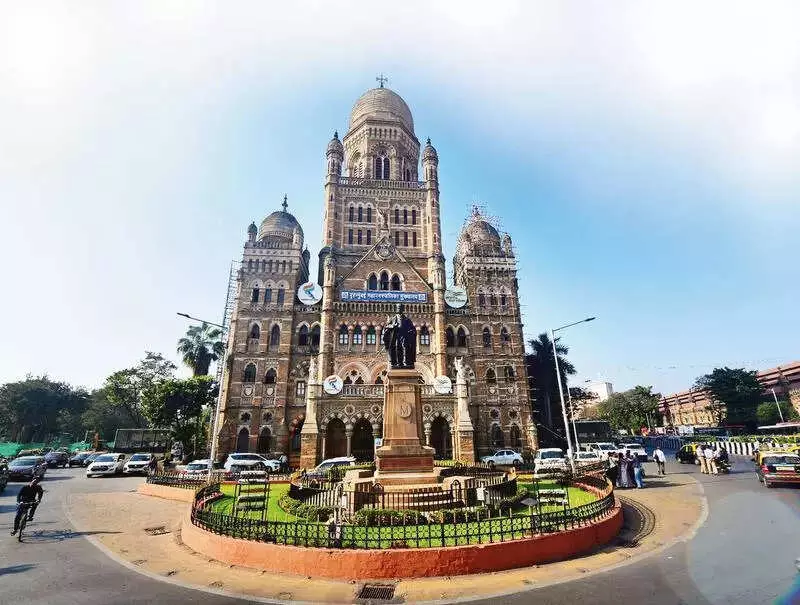
In a significant political development for India's financial capital, the ruling Mahayuti alliance has finally resolved its seat-sharing arrangement for the crucial Brihanmumbai Municipal Corporation (BMC) elections. After a grueling week of hard negotiations, the Bharatiya Janata Party (BJP) and the Shiv Sena faction led by Chief Minister Eknath Shinde have settled on a 137-90 seat-sharing formula.
Week of Hard Bargaining Ends in Agreement
The talks, which stretched till late Monday, were marked by disputes over at least 14 seats, according to Sena functionaries. They had placed the onus on the BJP, as the larger partner in the alliance, to ensure that 'everyone' was taken along. Political observers noted that Deputy Chief Minister Eknath Shinde ultimately held sway in the discussions, successfully persuading the BJP to agree to what is being termed a 'respectable' figure for his party.
Mumbai BJP chief and MLA Ameet Satam announced the conclusion of the talks. "Our talks are over. We will now campaign jointly and make sure the Mahayuti's mayor is anointed in the BMC," Satam stated. He confirmed that the BJP will contest 137 seats while the Shinde-led Sena will fight 90. He added that smaller allies would be accommodated with tickets from the combined quota of the two major partners.

Sena functionary Rahul Shewale echoed the sentiment, calling the talks positive and the finalised formula a good one for the alliance.
An Unprecedented Delay and a Midnight Operation
The protracted one-week negotiation process, largely driven by the Shinde camp, led to an unusual and embarrassing situation for the BJP. For the first time in a high-stakes election like the BMC polls, the party could not declare an official list of candidates. Instead, it was forced to distribute AB forms to aspirants in a late-night operation on Monday.
Analysts view this as a significant setback for the BJP, which was riding the momentum of recent wins in municipal council and nagar panchayat polls. The party distributed AB forms to over 60 aspirants, many of whom submitted their nomination papers without the formal backing of an official party list. This stands in stark contrast to the Congress, the other national party in the fray, which managed to declare its first list of candidates.
"Usually national parties like BJP are known to issue formal candidate lists, which hasn't been done this time," a political observer commented. The observer added that while some might claim this was a strategy to prevent poaching, the overall episode is seen as a dampener for the Mahayuti alliance and a testament to Shinde's bargaining power.
Implications for the Mahayuti Alliance
The conclusion of the seat-sharing talks, though delayed, sets the stage for a united campaign by the ruling alliance. The stated goal is to ensure a Mahayuti mayor leads the country's richest municipal corporation. However, the week-long public friction and the unprecedented step of distributing AB forms without a list have exposed cracks and highlighted the challenges of managing coalition dynamics.
The NCP, another partner in the state-level Mahayuti government, has been kept out of the alliance for the BMC polls, further simplifying—or complicating—the political calculus. As nominations proceed, all eyes will be on whether this hard-won seat-sharing pact translates into a cohesive and effective campaign on the ground in Mumbai.






