BJP Dominates Maharashtra Municipal Elections with Strong Mandate
The Bharatiya Janata Party achieved a decisive victory in Maharashtra's municipal corporation elections held on Thursday. Results show the BJP emerged as the single largest party in numerous corporations, significantly improving its performance compared to previous elections.
Mahayuti Alliance Secures Control in 24 Corporations
Of the 29 municipal corporations that conducted polls, the BJP-led Mahayuti alliance is poised to govern in 24 bodies. This represents a substantial consolidation of power for the ruling coalition across Maharashtra's urban centers.
The Congress party managed to emerge as the single largest party in just two corporations. Two other parties secured majority positions in two additional corporations, leaving the opposition with limited influence over how major cities will be administered.

Political Leaders React to Election Outcomes
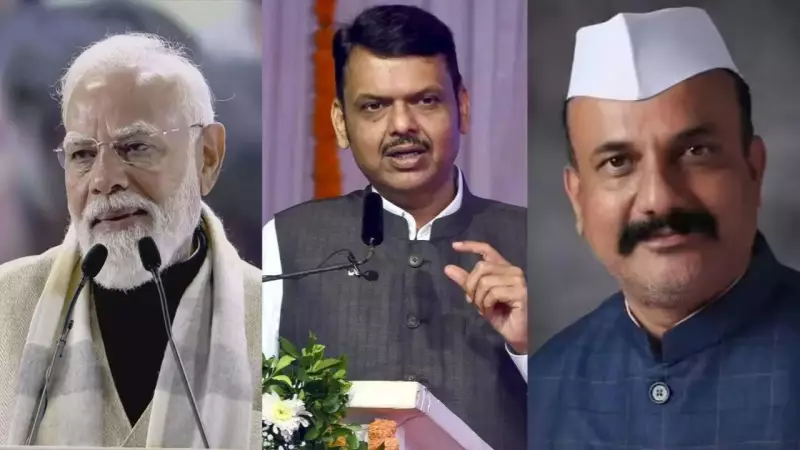
Chief Minister Devendra Fadnavis expressed satisfaction with the results, stating that voters chose the BJP-led Mahayuti alliance because they value honesty and development. He emphasized that the coalition presented a clear developmental agenda that resonated with citizens.
"We have received a record-breaking mandate in many municipal corporations," Fadnavis declared in Mumbai. "Mahayuti and BJP offered a developmental agenda that people have endorsed."
Prime Minister Narendra Modi acknowledged the BJP's success in the civic polls through a social media post. He thanked Maharashtra's dynamic population for supporting the National Democratic Alliance's governance approach.
Maharashtra Congress chief Harshvardhan Sapkal maintained that his party fought an ideological battle regardless of electoral outcomes. He noted that Congress may secure mayoral positions in five cities and approximately 350 corporator seats.
Detailed Breakdown of Election Results
The BJP has won or emerged as the single largest party in 21 of the 29 municipal corporations. In three important cities - Thane, Kalyan Dombivali, and Ahilyanagar - BJP's allies from the Nationalist Congress Party and Shiv Sena took the lead, with BJP securing second position.
Opposition parties managed victories in only five corporations: Latur, Malegaon, Parbhani, Vasai-Virar, and Chandrapur. Congress emerged as the single largest party in Chandrapur and Latur, while forming an alliance with Shiv Sena UBT in Parbhani.
In Vasai and Virar municipal corporation, Hitendra Thakur's Bahujan Vikas Aghadi secured 71 of 115 seats. Despite BJP and Shiv Sena joining forces here, they could only manage second position with 44 seats.
Notable Performances and Political Analysis
The BJP's weakest showing occurred in Malegaon, where the party secured merely two seats. The Indian Secular Largest Assembly of Maharashtra, a party founded by former NCP MLA Asif Shaikh, emerged as the single largest party with 35 of 84 seats. All India Majlis-e-Ittehadul Muslimeen captured second position with 21 seats.
In Parbhani, both factions of the Nationalist Congress Party collaborated, with the Ajit Pawar-led group winning 11 seats while the Sharad Pawar-led faction failed to secure any. Shiv Sena UBT spokesperson Sushma Andhare characterized the contest as money power versus people's power, claiming the latter prevailed.
Dr. Sanhita Joshi, an assistant professor in the Department of Civics and Politics at Mumbai University, offered analysis on the shrinking opposition representation. She suggested the results indicate "a structural narrowing of political alternatives" in urban governance.
"There is now hardly any major difference between ideologically different political parties with respect to core urban development strategies," Joshi observed, highlighting potential concerns about political diversity in municipal administration.
The election outcomes demonstrate the BJP's strengthening position in Maharashtra's urban political landscape, with the Mahayuti alliance establishing dominant control over most municipal corporations. Opposition parties face significant challenges in regaining ground as urban voters continue to favor the ruling coalition's development-focused agenda.