

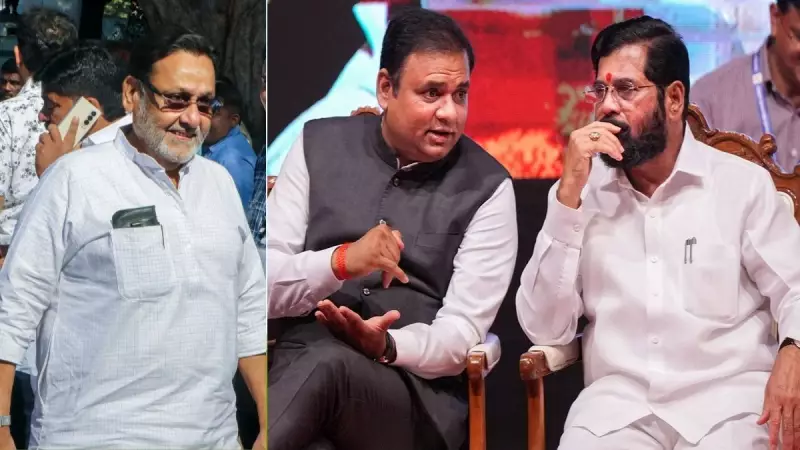
The political landscape of Mumbai is undergoing a significant transformation ahead of the crucial Brihanmumbai Municipal Corporation (BMC) elections in 2026. A new, internally adopted "family first" policy for selecting candidates is forcing major political parties to recalibrate their strategies and loyalties, potentially redrawing long-standing alliances.
The Genesis of the 'Family First' Mandate
The core of this political shift lies in a directive that prioritizes candidates whose family members have a history of allegiance to the party. This unwritten but strictly enforced rule means that aspirants whose relatives have previously contested elections on rival party tickets, or have shown support for opposing factions, are finding their paths blocked. The policy is reportedly being championed by key figures within the ruling Shiv Sena, led by Chief Minister Eknath Shinde, and is influencing candidate selection processes across the board.
This move is seen as a direct effort to ensure unwavering loyalty and to prevent the kind of internal rebellion and defections that have characterized Maharashtra politics in recent years. By favoring political families with a consistent lineage of support, parties aim to build a more committed cadre of corporators. The implications are profound, affecting seasoned politicians and newcomers alike who now must prove not just their own dedication but that of their entire familial political history.

Realignments and Rising Tensions
The enforcement of this policy is creating clear winners and losers, leading to visible realignments within Mumbai's political sphere. Several sitting corporators and hopefuls, whose kin have had associations with the undivided Shiv Sena (UBT) led by Uddhav Thackeray or other parties like the BJP and Congress, are facing exclusion. This has sparked discontent and quiet negotiations behind the scenes.
Political observers note that this "family first" filter is intensifying the competition for "clean" tickets—those belonging to families with an unblemished record of support for the current party leadership. Consequently, there is a noticeable migration of leaders and their support bases as they seek platforms that will accept their candidacy. The Bharatiya Janata Party (BJP), which is gearing up for a fierce contest to gain control of India's richest civic body, is also carefully evaluating its potential candidates through a similar lens of loyalty, though its parameters may differ slightly.
The policy has effectively turned family political trees into a key asset or liability. A candidate's electoral viability is now heavily dependent on a due diligence check of their spouse, parents, siblings, and even in-laws. This has led to a situation where personal political history is becoming as crucial as administrative promise or grassroots connect.
Broader Impact on Mumbai's Political Future
The ripple effects of this candidate selection strategy extend beyond mere ticket distribution. Firstly, it is likely to lead to a significant churn in the composition of the BMC, with many familiar faces potentially being replaced by new ones from "approved" political families. This could impact governance continuity and the dynamics of civic administration.
Secondly, the policy is forcing a consolidation of party bases. As leaders shift allegiances to find a party that will accommodate them, they bring their voter banks with them, altering the electoral arithmetic in Mumbai's 227 wards. This makes the pre-election period a volatile time of negotiations and potential poaching.
Finally, the focus on familial loyalty raises questions about meritocracy and representation. Critics argue that it could sideline capable independent-minded candidates who lack a long political lineage, potentially narrowing the pool of talent entering civic governance. The ultimate test will be in February 2026, when Mumbai's voters deliver their verdict on this new model of political selection and the equations it has reshaped.

As the countdown to the BMC election 2026 continues, one thing is clear: in Mumbai's high-stakes politics, your family's political resume is now your most important credential. The outcome will determine not just the control of the civic body's massive budget, but also validate or reject this nascent "family first" political doctrine.





