

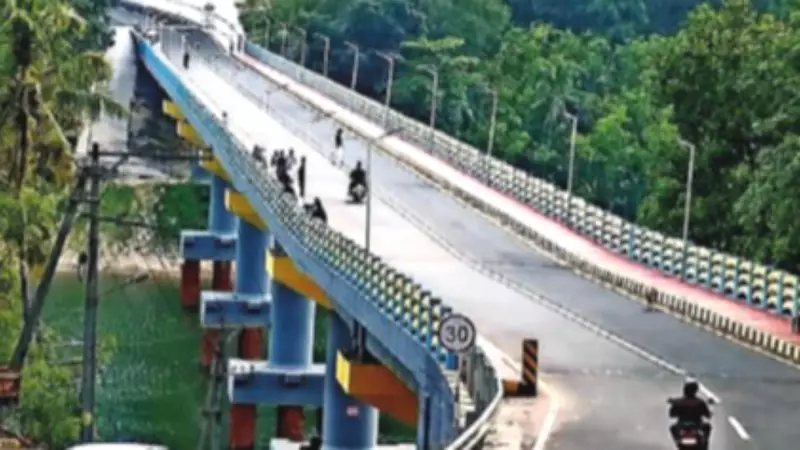
Bridge Ends Eight Decades of Risky Boat Travel for Tribal Voters in Kerala
For generations, election day in the remote Puravimala region of Amboori panchayat meant embarking on a perilous journey across the Karippar River, part of the expansive Neyyar Reservoir. Tribal communities had no alternative but to rely on traditional country boats, known locally as vallams, to reach their designated polling stations. This election season marks a historic transformation, as nearly 2,600 voters from approximately 1,000 tribal families will now simply walk or ride across a newly constructed bridge to cast their ballots.
End of an Era: From Vallams to Solid Ground
The recently inaugurated Kumbichalkadavu bridge, opened just one month ago, has officially terminated eight long decades of dependence on precarious boat travel for residents of the Thodumala and Chakkapara wards. These communities, spread across eleven settlements including Karikkuzhi, Chakkappara, Sankumkonam, and Kunnathumala, were geographically isolated by the reservoir created after the commissioning of the Neyyar dam. While a longer terrestrial route existed, the twenty-minute boat crossing remained the most practical and time-efficient method to access polling stations in Mayam and Amboori.
Chandran Kani, the Oorumooppan or tribal settlement head of Karikkuzhi, vividly recalls the collective anxiety that once defined every voting day. "The single available boat would make around fifteen frantic trips in a single day to ferry everyone," he recounts. "When the wind turned rough and the waters grew choppy, services were abruptly cancelled, leaving us stranded for hours on the shore, uncertain if we would get to vote." The hardship began when rising waters from the dam submerged large tracts of land, severing these communities from essential services. "Now, we can approach the polling booth with a genuine sense of celebration and security," he adds with relief.

Personal Transformations: From Boatman to Bridge Guardian
The bridge's impact is profoundly personal for individuals like Shaju J. For twenty-eight years, the 54-year-old served as the primary boatman, bearing the sole responsibility of safely ferrying residents across the treacherous reservoir. Today, in a symbolic shift, he has been appointed as the security guard for the very bridge that rendered his lifelong vocation obsolete.
"The entire community depended entirely on that single boat, and it was an immense and tough responsibility, especially during bad weather," Shaju reflects. "Now, I have been entrusted with a new, vital role protecting this bridge, and I am truly happy. It represents progress for my people."
For voters, polling days were historically grueling exercises in patience and endurance. Boats would not depart until a sufficient number of passengers had gathered, causing significant delays. Inclement weather, particularly during the volatile monsoon season, frequently forced the elderly, infirm, and those with young children to abandon their journey and return home without exercising their democratic right.
Shibu Chakkapara, a former panchayat member, confirms this struggle. "If the water was too rough or if the boats were severely delayed, many people, especially the older generation, would simply give up and return home without casting their precious vote," he recalls.
A New Chapter of Safety and Accessibility
Women, in particular, found the old system exceptionally taxing and frightening. Sindhu Vidyadharan of Thodumala shares her experience: "We would have to leave our homes very early, often with infants and young children in tow, and wait for hours near the shore. The actual crossing during heavy rain or strong winds was absolutely terrifying. Now, we can reach the polling booth safely and with dignity. It has made an enormous difference in our lives."

The significance of the Kumbichalkadavu bridge extends far beyond the electoral process. For Puravimala—a region nestled along the forested fringes of the Western Ghats near the Kerala-Tamil Nadu border, isolated despite being within the capital district—this infrastructure promises a revolution in everyday life. It guarantees improved, reliable access to critical healthcare facilities, schools for children, and local markets for trade.
This quiet transformation is rewriting the future for communities that have waited far too long for such a basic yet life-altering connection. The bridge stands not just as a concrete structure, but as a powerful symbol of inclusion, safety, and finally, reliable access for some of Kerala's most remote tribal residents.





