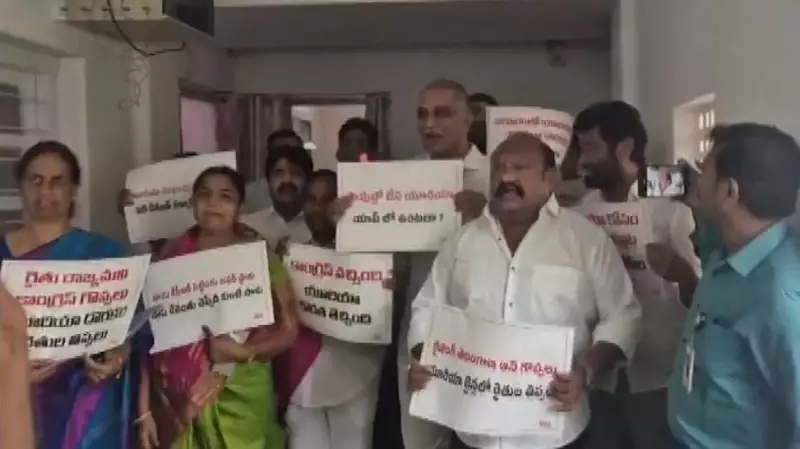
The Bharat Rashtra Samithi (BRS) has plunged the Telangana Legislative Assembly into a political standoff by announcing a complete boycott of its ongoing winter session. The party's drastic move comes as a direct protest against what it calls "blatant bias" and "unfair practices" by the newly appointed Speaker, Gaddam Prasad Kumar.
The Core of the Controversy: Allegations of Partiality
The BRS leadership, led by Legislative Party leader K. Chandrashekar Rao, has leveled serious accusations against Speaker Prasad Kumar. The primary grievance stems from the Speaker's decision to disallow an adjournment motion that the BRS had tabled. This motion was intended to discuss the contentious issue of crop losses suffered by farmers due to recent heavy rains and the perceived inadequacy of the state government's relief response.
BRS members argue that the rejection of their motion is not an isolated incident but part of a pattern of behavior favoring the ruling Congress party. They allege that the Speaker is consistently denying the opposition opportunities to raise matters of public importance, thereby stifling democratic debate and accountability. The winter session, which commenced on December 15, 2024, has been effectively paralyzed by this boycott from its very beginning.
Political Repercussions and Legislative Gridlock
The decision to boycott carries significant consequences for the functioning of the state legislature. With BRS members absent from the House, crucial legislative business, including debates on governance and potential questioning of the newly formed Congress government's policies, has come to a grinding halt. This creates an unusual situation where the government faces limited immediate scrutiny from the principal opposition party.
The political atmosphere in Hyderabad, the state capital, has grown increasingly tense. The BRS, which ruled the state for a decade until its recent defeat in the 2023 assembly polls, is positioning itself as a vigilant opposition being systematically silenced. On the other hand, the Congress government, led by Chief Minister Revanth Reddy, views the boycott as a tactic to avoid facing questions on the floor of the House regarding the BRS's own tenure.
The timing is critical, as this is the first full assembly session since the Congress party's victory. The boycott overshadows the government's agenda and sets a confrontational tone for the future of Telangana's politics. It also raises questions about the Speaker's role in ensuring equitable treatment of all parties in a vibrant democracy.
What Happens Next?
As of now, the BRS has shown no indication of ending its boycott. The party insists that a return to the assembly is contingent upon receiving assurances of fair treatment and an impartial chair. The onus is now on Speaker Gaddam Prasad Kumar and the Congress government to find a resolution to break the deadlock.
Potential outcomes include behind-the-scenes negotiations to address the opposition's concerns or a continuation of the stalemate, which would render the winter session largely ceremonial. This development is being closely watched as a test for both the resilience of Telangana's democratic institutions and the nature of opposition politics in the post-BRS era. The people of Telangana are left witnessing a political theater where legislative work is sacrificed at the altar of partisan conflict.