Chennai's Civic Report Card: How AIADMK & DMK Fared on Floods, Pollution, Waste & Rivers
As Chennai's 60-lakh electorate prepares to vote, liveability, service delivery, and quality of life are critical factors in their decision-making. This report examines the records of the AIADMK and DMK on four key civic issues, providing a detailed comparison of their achievements and shortcomings.
Flooding: A Persistent Challenge
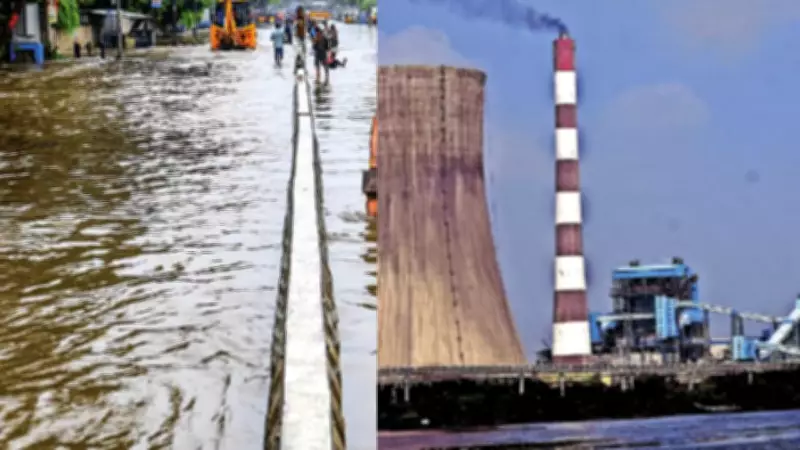
The slightest shower often leaves parts of Chennai in knee-deep water, making flooding a major concern for residents. Before being voted out of power in 2021, the AIADMK government tendered significant projects to address this issue. These included the Rs 3,225-crore Kosasthalaiyar stormwater drain work for North Chennai, funded by the Asian Development Bank, and the Rs 750-crore KfW German bank-funded project for South Chennai.
The DMK government, upon taking office, completed these projects and added the Rs 250-crore Singara Chennai stormwater drain work for the core city. Despite these efforts, gaps remain in areas where the works are incomplete. Flooding was severe during the 2023 Cyclone Michaung, but conditions have improved since then. The political battle now revolves around perception, with the DMK promoting its achievements and the opposition highlighting the missing links. For voters, the ultimate test is whether the roads in front of their houses flood during rains.

Steps taken:
- Rs 3,225 crore Asian Development Bank stormwater drain work for North Chennai
- Rs 750-crore KfW work for South Chennai
- Rs 250 crore Singara Chennai work for core city
Thumbs up: The city has seen relative improvement in flooding since 2023.
Issues: Waterbodies remain undesilted, and encroachments continue to affect key lakes in Velachery.
Pollution: A Lived Reality in North Chennai
Pollution has become a central issue in political party manifestos, particularly in North Chennai, where it is a daily reality. Problems include unchecked stack emissions from Tangedco plants, fly ash deposits on house balconies, unregulated construction dust, and emissions from old vehicles. Industrial clusters operate with repeated violations, leading to respiratory problems, skin issues, and eye irritation among residents.
The DMK government formed the Ennore-Manali Restoration Company, a special purpose vehicle intended to address these legacy issues. However, the company has not yet taken form. Both DMK and AIADMK face scrutiny from residents during campaigns over these unresolved problems. The Naam Tamilar Katchi has promised to ban industries along waterbodies and shut them down in key Ennore and Manali areas. Although top leaders of all parties have not emphasized this issue in their campaigns so far, pollution is expected to arise during door-to-door campaigns in affected areas.
Underaddressed legacy issues:
- Stack emission violations
- Fly-ash emission from Tangedco
- Effluent release into Kosasthalaiyar river
- Protests surrounding the upcoming waste-to-energy plant in Kodungaiyur
- Unchecked vehicular emissions
Solid Waste Management: Decades of Neglect
The Perungudi and Kodungaiyur dumpyards have plagued both Dravidian parties for nearly three decades. The AIADMK initiated biomining at Perungudi, but the contractor disappeared without starting the work. The DMK relaunched biomining in 2022 at Perungudi, reclaiming nearly 100 of the total 200 acres. Biomining has just begun at the 333-acre Kodungaiyur dumpyard.
However, neither government has found a green solution to handle the 6,000 tonnes of fresh waste generated daily in Chennai. The DMK's plans for incinerators faced local opposition at Perungudi and are proceeding in Kodungaiyur, where similar resistance exists. The DMK has promised to execute a waste-to-energy plant, but the fundamental problem of garbage management remains unresolved.
Steps taken:

- Rs 350 crore biomining for Perungudi dumpyard
- Rs 641 crore biomining project for Kodungaiyur dumpyard
- Rs 1,026-crore waste-to-energy incineration plant
Issues: Only half of the biomining work is complete in Perungudi, fresh waste is still dumped in marshlands, and North Chennai's waste continues to be dumped in Kodungaiyur.
River Restoration: Broken Promises
Chennai's four waterways—Cooum, Adyar, Kosasthalaiyar, and Buckingham Canal—are now more of a bane than a boon. Over the past 40 years, both DMK and AIADMK have made grand promises in election manifestos and state budgets. The DMK formed the Chennai Rivers Restoration Trust in 2006, and the AIADMK removed over 10,000 encroachments from the Cooum and Adyar rivers under the project.
Yet, thousands of encroachments remain, and the waterways are choked with untreated sewage and solid waste. Once hailed as the "Thames of South India," the Cooum is now a "dead" river with zero dissolved oxygen in some locations. The Rs 4,500-crore Adyar River Restoration Project remains on paper. In constituencies like Saidapet, encroachers form large vote banks, complicating efforts. Not even half of the demarcation of Buckingham Canal has been completed since a court order in 2022. This misgovernance provides ammunition for parties like NTK and TVK to amplify their change-maker narratives.
Steps taken:
- Basic clearing and widening of estuary
- Rs 4,500-crore Adyar river restoration project
- Integrated Cooum river Eco restoration project worth Rs 604.7 crore
- Buckingham Canal restoration worth Rs 1,500 crore
Issues: Projects are stalled, encroachments persist, sewage is not plugged, and political interference hinders progress.
As Chennai voters weigh their options, these four issues—flooding, pollution, solid waste management, and river restoration—will play a crucial role in shaping their electoral choices, highlighting the ongoing challenges in urban governance.