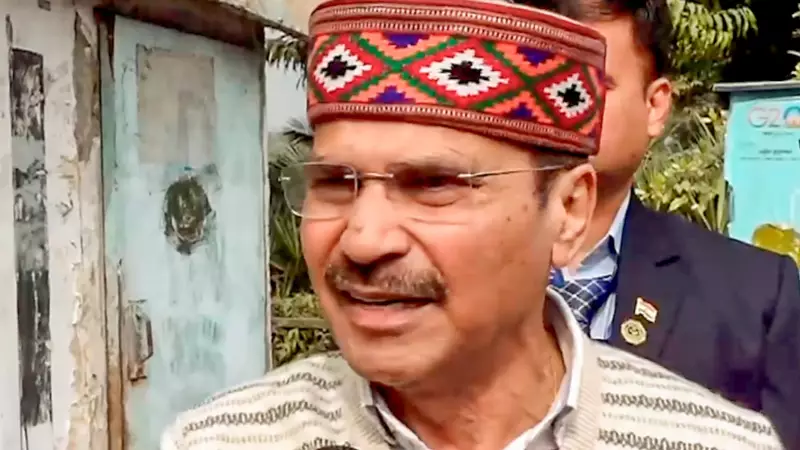
In a significant political development ahead of the West Bengal Assembly elections, senior Congress leader Adhir Ranjan Chowdhury met Prime Minister Narendra Modi on Tuesday, raising serious allegations of discrimination and violence faced by migrant workers from the state in Bharatiya Janata Party (BJP)-ruled states.
Concerns Over Migrant Workers and Linguistic Targeting
During the meeting at the Prime Minister's office in Delhi, Chowdhury, a former Union Minister, presented a detailed account of the hardships endured by Bengali-speaking migrants. He submitted a letter to PM Modi, stating that workers from West Bengal, who contribute to the nation's economy across various states, are confronting severe discrimination at regular intervals, particularly in BJP-governed states.
Chowdhury argued that these migrants, who invest their "sweat and skill" to earn a livelihood, are unjustly targeted. "They are being subjected to violence, hatred, abuse and even beaten to death," he wrote. He pinpointed a critical issue: their "only offence is that they speak in Bengali language," which often leads local administrations to mistakenly identify them as Bangladeshi infiltrators.

The Congress leader lamented that police and officials fail to distinguish between 'Banglabhasi' (Bengali speakers) and 'Bangladeshi' nationals, resulting in many being jailed or sent to detention centres without committing any crime. He cited the tragic case of 19-year-old migrant labourer Jewel Sheikh, who was lynched in Odisha's Sambalpur district on December 24, urging the PM to sensitize all state governments to prevent such persecution.
The Matua Community's Fear of Voter List Exclusion
Beyond the migrant issue, Chowdhury brought to the Prime Minister's attention the growing anxiety within West Bengal's politically influential Matua community. He stated that community members, many of whom migrated from Bangladesh decades ago, fear their names will be removed from electoral rolls following the recently concluded Summary Revision of the electoral roll (SIR).
"There are many who came from Bangladesh to our country due to fear and may not have requisite papers. They are scared because their names are being removed. They are in panic," Chowdhury told the media after the meeting. The Matua community, a Scheduled Caste group, holds sway over several assembly seats and is actively courted by both the ruling Trinamool Congress (TMC) and the BJP.
Data from a survey by the Kolkata-based SABAR Institute seems to fuel these concerns. It indicates that Matua-dominated constituencies like Krishnaganj, Ranaghat Uttar Purba, Bagda, and Gaighata have shown a high rate of "untraceable" or absent voters after the first phase of the SIR. Notably, a 24-member Matua delegation had already met Congress leader Rahul Gandhi in Bihar's Ekma in August, seeking assistance on this matter.
Political Context and Assurances
The meeting occurs against the backdrop of intense political positioning for the Bengal elections scheduled for April-May next year. On the same day, Union Home Minister Amit Shah launched a sharp attack on the Mamata Banerjee-led TMC government. When questioned if his meeting with the PM had political motives ahead of the polls, Chowdhury denied it, stating his visit to Delhi was coincidental for a Congress Working Committee meeting and he seized the opportunity to raise these public issues.
Following the discussion, Chowdhury said the Prime Minister assured him that he would look into the matters raised. "He said that this should not happen and that he is looking into it," the Congress leader recounted. Chowdhury also expressed disappointment that the issue of migrant workers' welfare was not adequately discussed in the recent Parliament session.
This intervention highlights the Congress's attempt to carve a relevant space in West Bengal's bipolar TMC vs. BJP contest, especially after failing to win a single seat in the 2021 alliance with the Left. By championing the cause of migrant workers and the Matua community, Chowdhury addresses two potent socio-political issues that could influence the upcoming electoral battle.