

Congress Grapples with Reservation Shake-Up in Vadodara Stronghold
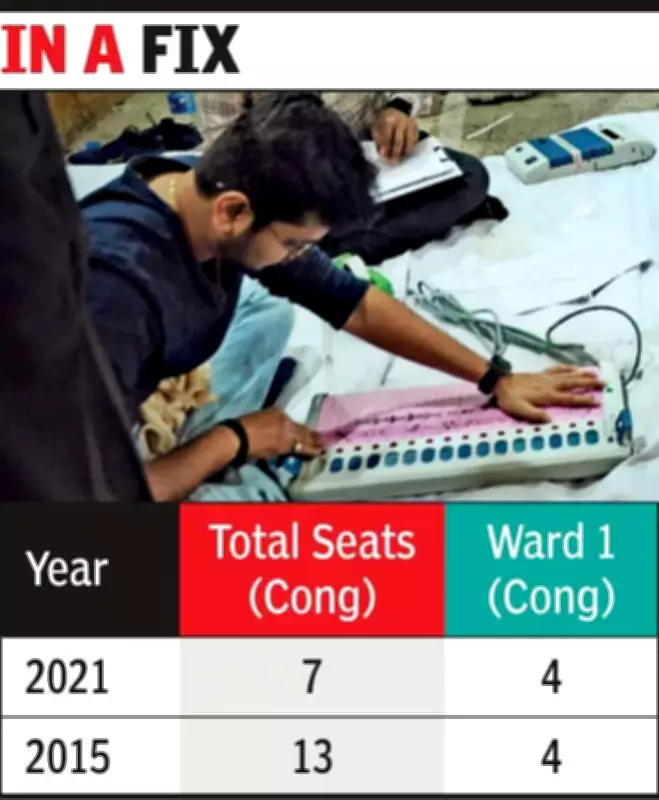
The Congress party in Vadodara is navigating a precarious political landscape following the latest reservation rotation for the Vadodara Municipal Corporation (VMC) board. Previously holding just seven councillors, the party now faces a strategic conundrum in its sole bastion, Ward 1, which has been reshuffled due to new reservation mandates.
Ward 1: A Historical Stronghold Under Pressure
Ward 1 has long served as the Congress's only reliable pocket of strength within the city, with the party securing all seats in both the 2015 and 2021 elections. In the last poll, this ward featured entirely general seats, leading to the election of four Congress councillors: Ami Ravat, Pushpa Waghela, Jaha Desai, and Harish Patel. However, the upcoming civic polls introduce a significant twist: two of the four seats in Ward 1 have been reserved—one for an OBC woman and another for an ST male candidate.
This development places the Congress in a bind, as none of the incumbent women councillors belong to the OBC category, and neither of the male councillors is from the ST community. With limited options, the party must reassess its candidate lineup to comply with the new reservation rules while maintaining its electoral foothold.

Strategic Adjustments and Candidate Dilemmas
The reservation changes have sparked internal competition among sitting councillors. Both women councillors, Ami Ravat and Pushpa Waghela, are now vying for the lone general seat designated for women. Similarly, Jaha Desai and Harish Patel are focusing on the general seat for men. Historically, the Congress has fielded candidates from reserved categories on general seats, but the current configuration complicates such adjustments, requiring more nuanced strategies.
To address this, the party is exploring various avenues to accommodate all its incumbent councillors. Options under consideration include:
- Fielding spouses of current councillors either within Ward 1 or in other wards to create space for reserved category candidates.
- Leveraging the party's claim of having at least two strong ST male candidates for the reserved seat, potentially easing the selection process.
Despite these efforts, the permutations suggest that at least one aspirant may need to either shift to another ward or sit out the upcoming election. A party functionary emphasized, "The party is making all efforts to ensure that reservations do not affect its prospects in the ward." This statement underscores the delicate balance the Congress must strike between adhering to reservation norms and preserving its electoral strength.
Broader Implications for Vadodara Politics
This situation highlights the broader challenges political parties face in adapting to reservation rotations, which can disrupt established strongholds and force strategic realignments. For the Congress in Vadodara, the outcome in Ward 1 could significantly impact its overall performance in the VMC board, given its limited representation elsewhere. As the party navigates these complexities, its ability to innovate and accommodate diverse candidates will be crucial in maintaining relevance in the city's political arena.






