

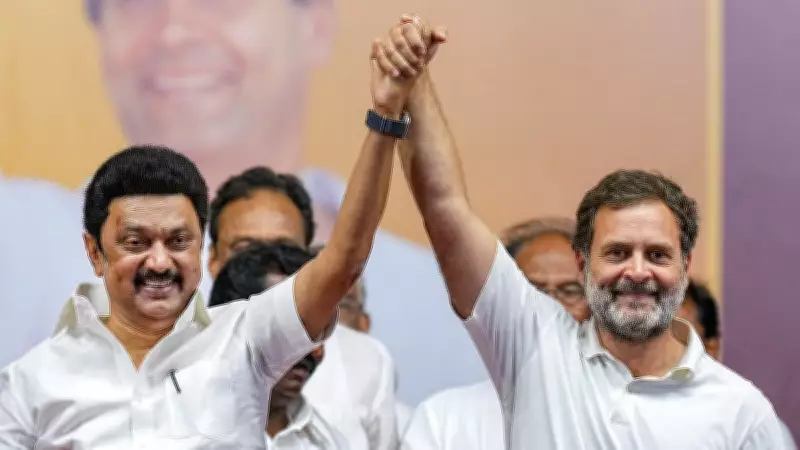
Congress-DMK Alliance Shows Cracks Ahead of Puducherry Elections
As the Puducherry Assembly Elections 2026 approach, the political landscape is witnessing a notable shift with the Congress and DMK alliance displaying visible strains. Key leaders Rahul Gandhi and MK Stalin, who have previously referred to each other as brothers, are now campaigning separately, highlighting underlying tensions within the coalition.
Logistical Issues or Deeper Rifts?
Officially, both parties have attributed the separate campaigns to logistical problems, citing scheduling conflicts and organizational challenges. However, political analysts suggest that this move points to a more significant strategic divergence between the two allies. The decision to avoid joint rallies has raised eyebrows, especially given their past emphasis on unity in Tamil Nadu politics.
The gulf between Rahul Gandhi and MK Stalin is becoming increasingly evident, with each leader focusing on distinct voter bases and messaging. This separation could impact the alliance's cohesion and effectiveness in the upcoming elections, potentially altering the electoral dynamics in Puducherry.

Historical Context and Future Implications
Historically, the Congress-DMK partnership has been a cornerstone of opposition politics in the region, but recent developments indicate a possible recalibration of alliances. The separate campaigning strategies may signal a broader realignment ahead of the Tamil Nadu Assembly Elections 2026, with both parties seeking to assert their individual identities.
Observers note that while joint campaigns were anticipated, the current scenario underscores the complexities of coalition politics. The outcome of this rift could influence not only the Puducherry elections but also set a precedent for future collaborations in South Indian states.
As the election date nears, all eyes are on how Congress and DMK navigate these differences, with potential repercussions for their electoral fortunes and the broader political landscape in India.






