

Congress and DMK Grapple with Seat-Sharing Confusion in Puducherry
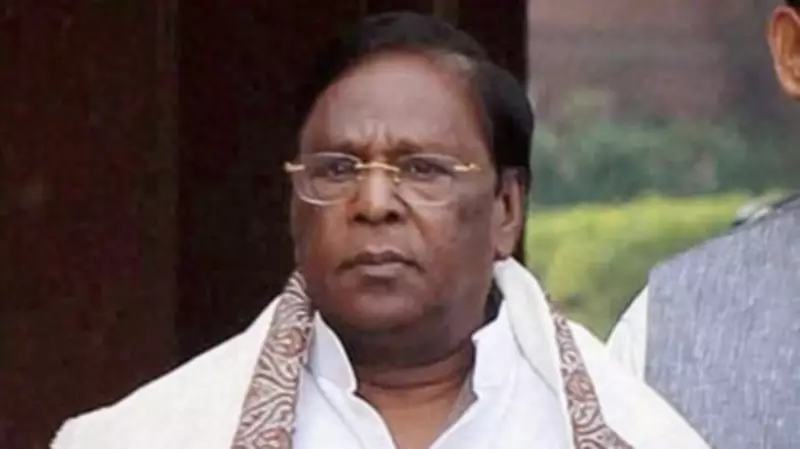
In a recent development that has stirred political circles in Puducherry, former Chief Minister V. Narayanasamy has pointed fingers at both the Congress and the Dravida Munnetra Kazhagam (DMK) for the ongoing confusion over seat-sharing arrangements. Narayanasamy described this situation as a minor setback for the alliance, emphasizing that both parties share responsibility for the lack of clarity as elections approach.
Narayanasamy's Critique of Alliance Dynamics
V. Narayanasamy, a senior Congress leader who previously served as the Chief Minister of Puducherry, did not mince words in his assessment. He stated that the confusion stems from miscommunication and delayed decisions between the two parties, which have historically collaborated in the union territory. According to him, this has created uncertainty among party workers and voters, potentially impacting the alliance's electoral prospects.
He further elaborated that such issues are not uncommon in coalition politics but stressed the need for swift resolution to avoid derailing campaign efforts. Narayanasamy's comments come at a critical juncture, with political activities intensifying in Puducherry ahead of the upcoming polls.

Background on Congress-DMK Alliance in Puducherry
The Congress and DMK have a long-standing alliance in Puducherry, often joining forces to contest elections and govern the union territory. This partnership has seen both successes and challenges over the years, with seat-sharing being a recurring point of negotiation. In the current scenario, the confusion revolves around the distribution of constituencies, with both parties reportedly holding differing views on the optimal allocation.
Sources indicate that internal discussions have been ongoing, but a final agreement has yet to be reached, leading to the public airing of grievances by leaders like Narayanasamy. This highlights the delicate balance required in coalition management, especially in a politically sensitive region like Puducherry.
Potential Implications for the Upcoming Elections
The seat-sharing confusion could have several ramifications for the Congress-DMK alliance:
- Voter Perception: Prolonged uncertainty may erode voter confidence, making it harder to mobilize support.
- Campaign Coordination: Delays in finalizing candidates could hinder joint campaign strategies and resource allocation.
- Opposition Advantage: Rival parties might exploit this confusion to gain an edge in the electoral race.
Narayanasamy, however, remains optimistic, viewing this as a temporary hurdle that can be overcome with better communication and mutual understanding. He urged both parties to prioritize the alliance's broader goals over individual interests to ensure a cohesive front against opponents.
Looking Ahead: The Path to Resolution
As the election date draws nearer, pressure is mounting on the Congress and DMK to resolve the seat-sharing impasse. Political analysts suggest that a swift and amicable settlement is crucial to presenting a united face to the electorate. Narayanasamy's call for responsibility underscores the need for proactive dialogue and compromise.
In conclusion, while the confusion over seat-sharing represents a minor setback, it serves as a reminder of the complexities inherent in coalition politics. Both Congress and DMK must navigate this challenge effectively to maintain their competitive edge in Puducherry's political landscape.






