Centre's Darjeeling Interlocutor Faces Mixed Reception Amid Political Tensions
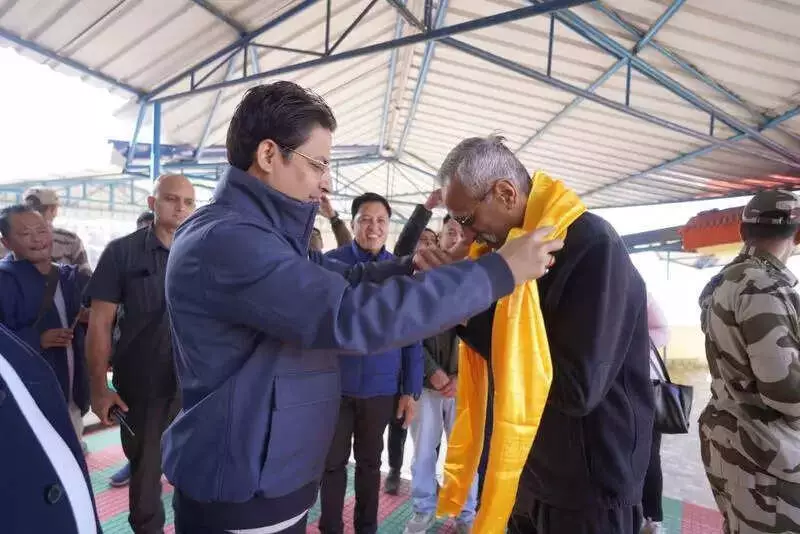
The maiden visit of Centre-appointed interlocutor Pankaj Kumar Singh to Darjeeling on Saturday has triggered a sharply divided response from political parties in the hills, unfolding against the backdrop of strong protests by West Bengal Chief Minister Mamata Banerjee against his appointment. This development marks a significant moment in the long-standing political discourse surrounding the region's aspirations.
Contrasting Political Stances Emerge
The visit elicited polarized reactions from key stakeholders. Bharatiya Gorkha Prajatantrik Morcha (BGPM) chief Anit Thapa, an ally of the ruling Trinamool Congress, dismissed the move as nothing more than an "election gimmick". In a firm statement, Thapa ruled out any meeting with the interlocutor, even if invited, asserting that "sending an interlocutor close to polls is an attempt to fool the people, and we will not be fooled."
In stark contrast, BJP MP Raju Bista welcomed the initiative, characterizing it as a constructive step towards dialogue. Bista expressed optimism, stating, "The visit is a fresh opportunity… it could help bring all stakeholders together to address the long-standing aspirations of the people." This welcoming stance was echoed by Gorkha Janmukti Morcha (GJM) president Bimal Gurung, with the party's general secretary Roshan Giri reiterating that their primary demand remains the creation of a separate Gorkhaland state.

Background of Appointment and Protests
Singh has been specifically handpicked by the Central government to advance the tripartite talks involving the people of the Darjeeling Hills, Terai, and Dooars, alongside the Centre and the West Bengal government. However, his appointment has been met with vehement opposition from Chief Minister Mamata Banerjee.
Banerjee had written two formal letters to Prime Minister Narendra Modi in October and November 2025, strongly protesting against Singh's appointment. In these communications, the Chief Minister urged the Prime Minister to "re-consider and revoke" the decision, highlighting the ongoing political friction between the state and central administrations on this sensitive issue.
Historical Precedent and Current Context
This is not the first instance of the Central government appointing an interlocutor for the Darjeeling region. In a historical parallel from 2009, the Congress-led UPA government appointed retired Lieutenant General Vijay Madan to facilitate talks between the Centre, the GJM, and the Bengal government. However, those efforts yielded little progress towards a permanent solution, and Madan resigned from his post in 2011 ahead of the Bengal assembly polls.
The current appointment and visit of Pankaj Kumar Singh thus occur within a complex framework of historical negotiations, unfulfilled aspirations, and heightened political sensitivities, particularly with elections on the horizon. The mixed reactions underscore the deep-seated divisions and the challenging path ahead for any meaningful dialogue concerning the future of the Darjeeling region and its people.