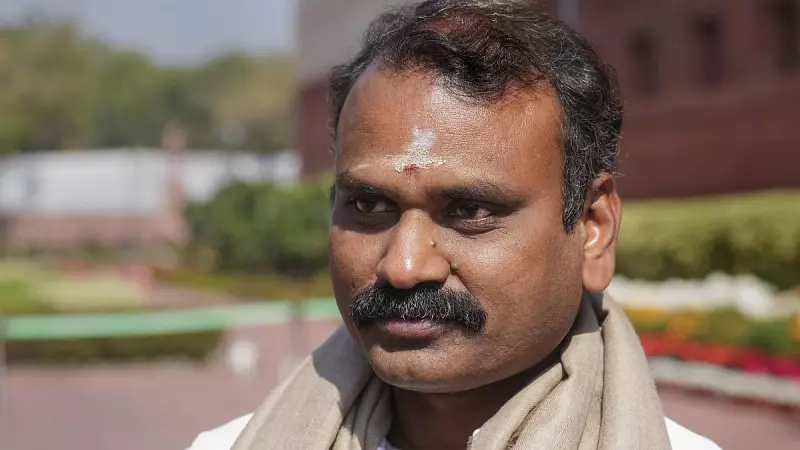
Union Minister L. Murugan has launched a sharp attack on Tamil Nadu's ruling Dravida Munnetra Kazhagam (DMK) government, accusing it of disrespecting the Indian Constitution and the legacy of Dr. B.R. Ambedkar. The controversy stems from an incident where devotees of Lord Murugan were allegedly prevented from performing a traditional lamp-lighting ceremony.
The Core of the Controversy
According to the Union Minister's statement, the dispute centers on a planned ritual at the Thirupparankundram hill. Murugan claimed that the state government not only actively dissuaded devotees from lighting the ceremonial lamp, known as a 'deepam', but also took a more drastic step. He alleged that even the Central Industrial Security Force (CISF) personnel, who were accompanying the devotees for the ritual on a hilltop pillar, were turned away by the authorities. This action, he argues, represents a direct infringement on the fundamental right to worship.
Accusations of Constitutional Violation
Minister Murugan framed the incident as a grave constitutional matter. He connected the devotees' right to perform their religious practice to the principles enshrined by Dr. B.R. Ambedkar in the Constitution. By obstructing this right, the DMK administration is being accused of showing disregard for these foundational values. The Minister's remarks, made public on 30 December 2025, have added a significant political and ideological dimension to the local religious event, elevating it to a national debate on secularism and freedom of religion.

Political Repercussions and Next Steps
This accusation is likely to intensify the ongoing political friction between the Bharatiya Janata Party (BJP)-led central government and the DMK government in Tamil Nadu. The incident at Thirupparankundram is no longer just a local law-and-order or religious issue; it has been positioned as a symbolic battle over constitutional rights. The state government is yet to issue a detailed response to these specific allegations. The development promises to keep the issue in public discourse, potentially influencing the political narrative in the state around themes of federalism, religious freedom, and cultural practices.