Kerala's Electoral Landscape: The Quiet Revolution of the Ezhava Community
The narrative of Kerala's political dynamics is frequently framed through simplistic dichotomies: Left versus Congress, secularism versus communalism, reform versus identity politics. However, beneath these surface-level conflicts flows a deeper, more decisive current that has influenced electoral outcomes for generations. This current is now undergoing a significant transformation, potentially reshaping the political map as Kerala approaches the crucial 2026 assembly elections.
The Historical Journey: From Social Exclusion to Political Centrality
At the heart of this political churn stands the Ezhava community, whose remarkable journey from social marginalization to becoming a cornerstone of Kerala's politics mirrors the state's own socio-political evolution. The community's contemporary political decisions may very well decide who governs "God's Own Country" in the coming years.
Long before electoral calculations gained prominence, the Ezhavas were engaged in a more fundamental struggle for recognition, dignity, and access to opportunities. In 1896, a landmark petition signed by 13,176 community members was presented to the Travancore maharaja, protesting their systematic exclusion from government employment. This document represented more than mere grievance; it marked an early expression of collective political consciousness.

Classified as avarna within Kerala's rigid caste hierarchy, the Ezhavas faced severe restrictions permeating every aspect of daily life, including limited access to temples, public spaces, and educational institutions. Unlike many marginalized groups, however, they began organizing early, employing petitions, reform movements, and educational advancement as tools of resistance and empowerment.
The Reformist Foundation and Political Awakening
This mobilization found its most profound expression in the teachings of Sri Narayana Guru, whose philosophy rejected caste hierarchies while emphasizing education, self-respect, and social equality. The establishment of the Sree Narayana Dharma Paripalana Yogam in 1903 marked a pivotal moment, creating an institutional framework that promoted rational thinking and social reform in a region deeply entrenched in orthodoxy.
What followed was not merely social upliftment but a gradual politicization. Community leaders like T.K. Madhavan aligned with broader national movements, including Mahatma Gandhi's non-cooperation campaign. By the early twentieth century, the Ezhavas had emerged as one of the most organized and educated communities among those historically labeled as untouchable.
The Enduring Left Connection
The rise of the Ezhava community coincided remarkably with the emergence of Left politics in Kerala, creating a natural ideological alignment. A community shaped by anti-caste reform movements found common ground with political organizations rooted in class struggle.
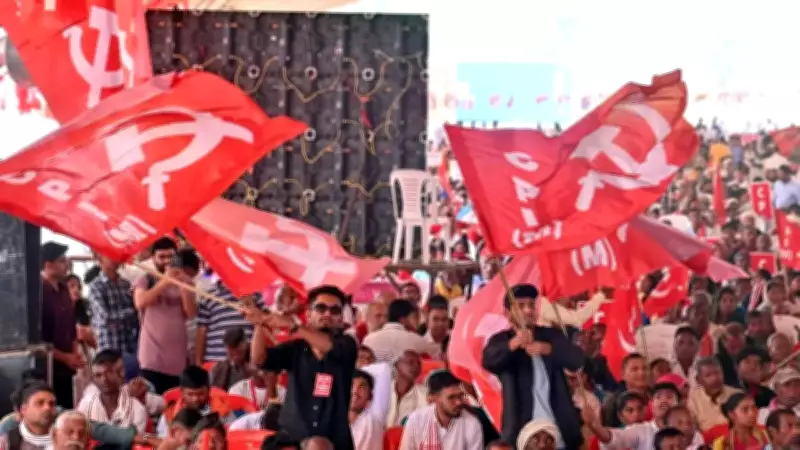
During the 1930s and 1940s, many followers of Narayana Guru became actively involved in the early Communist movement. Over subsequent decades, the Ezhavas evolved into the structural backbone of Left parties, particularly the Communist Party of India and the Communist Party of India (Marxist). Their support was not occasional but deeply embedded in the political fabric.
Numerical data underscores this relationship. Constituting approximately 23 percent of Kerala's population, the Ezhavas represent the largest Hindu caste group in the state. Their geographical distribution across Travancore, central Kerala, and parts of Malabar ensures influence across multiple regions rather than isolated pockets.
Electorally, this translated into consistent support for the Left Democratic Front. Leadership positions within the Left further reflected this bond, with chief ministers like V.S. Achuthanandan and Pinarayi Vijayan emerging from the community, reinforcing perceptions of representation and alignment. Ezhava legislators currently account for roughly 19 percent of assembly seats, a significant share in a state where no single community dominates beyond a quarter of the legislative body.

The Gradual Shift: Cracks in Historical Alignment
Beneath this seemingly stable surface, a gradual but unmistakable transformation is underway. Recent electoral cycles, particularly the Lok Sabha elections, have revealed fractures in the long-standing alliance between the Ezhavas and the Left.
The Bharatiya Janata Party's growing vote share in Kerala, approaching 20 percent, has been partly attributed to inroads into the Ezhava base. Constituencies including Thiruvananthapuram, Alappuzha, Attingal, and Kottayam have demonstrated signs of this shift. The BJP's historic victory in Thrissur, securing its first Lok Sabha seat in the state, has added symbolic weight to this emerging trend.
In several assembly segments, the party has emerged as the leading force based on vote share—a first in Kerala's political history. While numbers alone don't tell the complete story, they indicate a change that has moved beyond marginal significance.
Driving Forces Behind the Realignment
Multiple factors are propelling this shift, extending beyond purely ideological considerations. Economic transformation represents one of the most significant drivers.
Kerala's economy has transitioned from agrarian structures toward service sectors, migration-driven remittances, and emerging industries like information technology and tourism. Within the Ezhava community, this economic shift has created a divergence: one segment has ascended the economic ladder as professionals, entrepreneurs, and global workforce participants, while another substantial portion remains tied to traditional occupations or informal labor, facing economic uncertainty.
This economic divergence has generated new aspirations and frustrations. Younger, educated community members often encounter limited opportunities within the state, leading to migration or political dissatisfaction. While welfare schemes provide support, they are perceived as insufficient to address structural economic challenges.
Political messaging has effectively tapped into these sentiments. The narrative that the Left has shifted focus toward minority appeasement—whether accurate or not—has become a recurring theme in rhetoric aimed at drawing the community toward alternative political platforms.
The Evolving Role of Identity Politics
Attempts to integrate the Ezhavas into a broader Hindutva framework represent a significant departure from their historical trajectory. The community's reformist legacy, rooted in anti-caste principles and universalism, creates tension with identity-driven political mobilization.
Critics argue this shift risks undermining the foundational principles established by Narayana Guru. Voices within the community, including religious and social institutions like the Sivagiri Mutt, have expressed concern about the politicization of the Guru's teachings.
Simultaneously, proponents of realignment argue that political realities have evolved, necessitating adaptation to secure community interests. They contend that ideological purity cannot come at the expense of political relevance. This tension between legacy and pragmatism is actively playing out within the community, demonstrating that it is far from a monolithic voting bloc.
Electoral Implications for 2026 and Beyond
As Kerala progresses toward the 2026 assembly elections, the significance of the Ezhava vote becomes increasingly pronounced. In a state where no single community dominates, even marginal shifts can produce disproportionate effects.
The widespread distribution of Ezhava voters across regions means their influence extends beyond a handful of constituencies, shaping outcomes in dozens of seats, particularly in interior districts where their presence is strongest.
The Left Democratic Front continues to field a higher proportion of Ezhava candidates compared to rivals, reflecting awareness of this importance. However, candidate selection alone may prove insufficient if voter sentiment continues evolving.
The United Democratic Front, while historically less dependent on the Ezhava base, could benefit indirectly from any fragmentation of votes that weakens the Left. For the BJP and its allies, the strategy is clear: consolidate incremental gains, deepen engagement through organizational networks like SNDP branches, and present themselves as a viable alternative. Even if outright victory remains challenging, increasing vote share and influencing seat outcomes can fundamentally reshape Kerala's political landscape.
Beyond Mere Numbers: The Larger Significance
Reducing the Ezhava community to electoral arithmetic alone would overlook their profound historical significance. Their importance extends beyond numerical strength to the ideas they have historically championed.
From early petitions against discrimination to leadership in social reform movements, from shaping Left politics to now questioning it, the community has consistently been at the forefront of Kerala's socio-political evolution. Their current crossroads reflects broader transformations within the state: tensions between welfare and growth, identity and ideology, tradition and modernity.
The 2026 assembly polls are unlikely to produce sudden, dramatic realignment. Political shifts in Kerala tend to be gradual, layered, and shaped by multiple factors. However, the direction of movement is becoming increasingly discernible.
If the Left can effectively address the economic and representational concerns of the Ezhava community, it may retain core support while adapting to new realities. If not, the erosion could deepen, creating expanded space for political rivals.
For the community itself, the challenge remains equally complex: balancing historical legacy with contemporary aspirations, resisting divisive politics while seeking greater influence, and ensuring political choices translate into tangible benefits.
What remains certain is that the Ezhavas will continue to be central to Kerala's political narrative—not as passive voters but as active participants shaping outcomes. As the state approaches another electoral milestone, the question is no longer whether they matter, but how they will choose to exercise their influence this time.