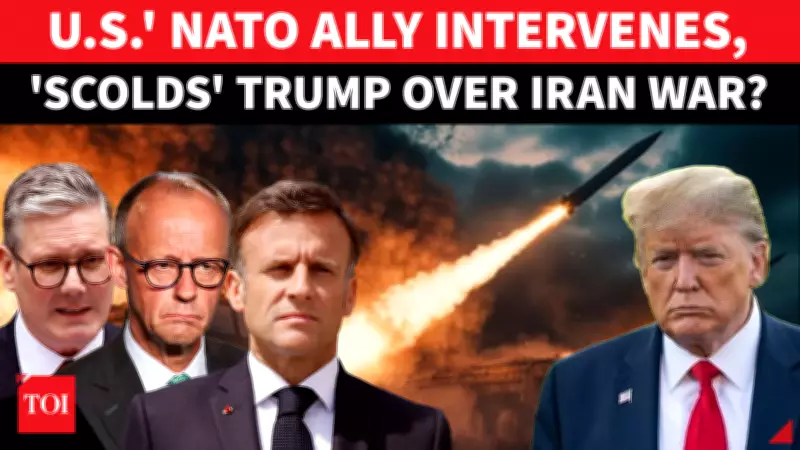
France Openly Challenges Trump's Iran Stance as Middle East Tensions Soar
In a bold move that has sent shockwaves through international diplomatic circles, France, a key NATO member, has issued a stark public warning to former U.S. President Donald Trump regarding his aggressive rhetoric towards Iran. This development comes as tensions in the Middle East escalate dramatically, with Trump issuing stern threats over the strategic Strait of Hormuz, a critical chokepoint for global oil shipments.
French Caution Against Violating International Law
French officials have explicitly cautioned that any military strikes targeting Iran's civilian or energy infrastructure would constitute a clear violation of international law. They emphasize that such actions could provoke severe retaliation from Iran, potentially dragging the entire region into a dangerous and uncontrollable cycle of conflict. This warning underscores France's commitment to upholding legal norms and preventing further destabilization in an already volatile area.
Rising Global Concerns Over Energy and Economy
The situation is further complicated by Iranian threats and a sharp increase in global fuel prices, which have intensified fears about energy security and economic stability worldwide. Analysts warn that any military escalation could have far-reaching consequences, not only for the Middle East but also for the global economy, as disruptions in oil supplies could trigger inflation and market turmoil.

Diplomacy Clashes With Aggressive Rhetoric
The international community is closely monitoring the clash between diplomatic efforts and aggressive posturing, highlighting the fragile balance between war and peace in this critical geopolitical hotspot. With Trump's warnings and France's counter-warnings, the stakes are higher than ever, as nations grapple with the risk of a broader conflict that could involve multiple actors and have unpredictable outcomes.
This unfolding crisis serves as a reminder of the delicate interplay between power politics and international law, with France's intervention marking a significant moment in NATO's internal dynamics and global security discussions.