

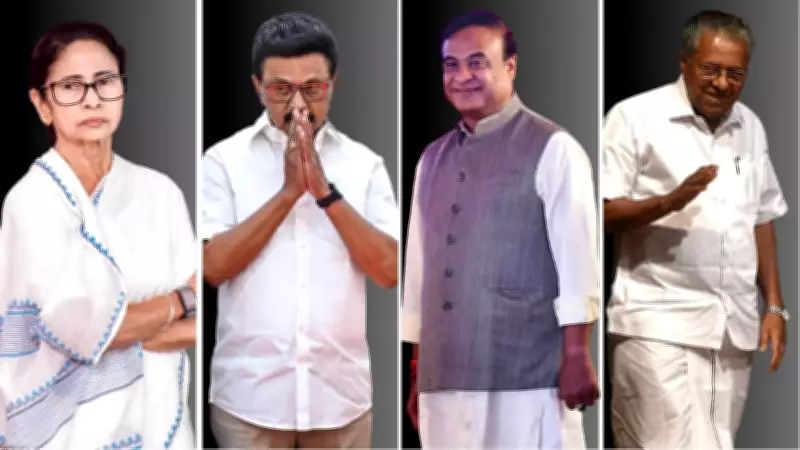
Beyond Headlines: The Silent Forces Reshaping Four State Elections
In the bustling arena of Indian politics, where daily headlines often dominate public discourse, a deeper analysis uncovers five pivotal factors that are quietly shaping electoral dynamics in four key states. These elements, though underreported, wield significant influence over voter sentiment and political outcomes, offering a nuanced perspective beyond conventional media narratives.
1. Demographic Shifts and Youth Aspirations
One of the most profound yet overlooked factors is the changing demographic landscape. States are witnessing a surge in young voters whose aspirations extend beyond traditional political promises. This demographic is increasingly focused on issues like employment opportunities, educational reforms, and technological integration in governance. Political parties that fail to address these evolving expectations risk alienating a substantial voter base, making this a silent but powerful electoral determinant.
2. Local Governance and Administrative Efficiency
While national policies often grab attention, the effectiveness of local governance plays a crucial role in shaping voter perceptions. In these four states, issues such as the implementation of state-specific schemes, responsiveness of local administrations, and the quality of public services are quietly influencing electoral choices. Voters are increasingly evaluating incumbent governments based on tangible outcomes at the grassroots level, making administrative efficiency a key, albeit underreported, factor.

3. Economic Disparities and Regional Development
Economic factors, particularly regional disparities in development, are another critical element. In these states, uneven growth between urban and rural areas, or among different districts, is creating distinct electoral narratives. Voters in less-developed regions are prioritizing infrastructure projects, agricultural support, and industrial investments, while those in more affluent areas may focus on sustainability and innovation. This economic dichotomy is subtly driving political campaigns and voter alignment.
4. Social Cohesion and Community Dynamics
Social factors, including community relations and caste-based politics, remain influential but are often oversimplified in mainstream coverage. In these states, nuanced shifts in social alliances, the role of local leaders in bridging divides, and emerging issues like migration and urbanization are reshaping electoral equations. Understanding these complex social dynamics is essential for grasping the full picture of political trends, as they affect voter mobilization and party strategies.
5. Environmental and Sustainability Concerns
Increasingly, environmental issues are entering the electoral fray, though they rarely make headlines. In these four states, factors such as water scarcity, pollution levels, and climate resilience are becoming important to voters, especially in regions facing ecological challenges. Political parties that incorporate sustainability into their agendas may gain an edge, highlighting how environmental consciousness is quietly becoming a factor in state elections.
The Bigger Picture: Why These Factors Matter
Collectively, these five factors underscore the complexity of Indian state politics. They reveal that electoral outcomes are not solely determined by high-profile campaigns or national issues but are deeply rooted in local realities. By focusing on these underreported elements, analysts and voters alike can gain a more comprehensive understanding of political trends, potentially predicting shifts that mainstream coverage might miss.
As elections in these states approach, it is crucial to look beyond the headlines. The interplay of demographic changes, governance quality, economic disparities, social dynamics, and environmental concerns will likely define the political landscape, making these silent factors as significant as any loudly debated topic.






