

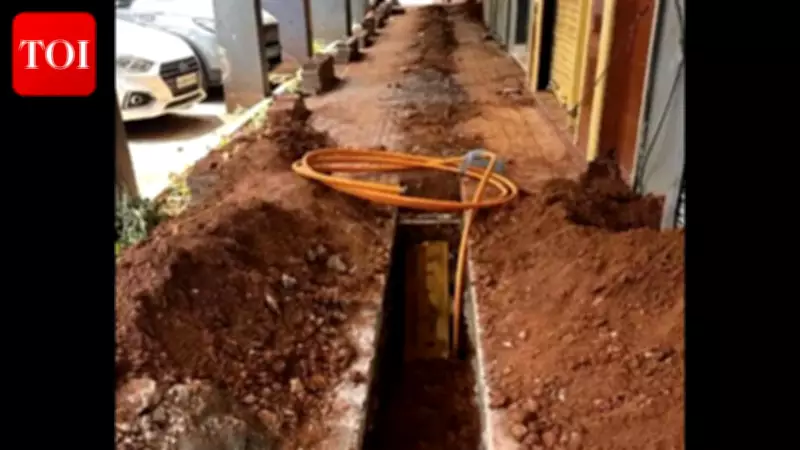
Goa's Piped Gas Expansion Stalled by Bureaucracy and Low Public Adoption
In Panaji, Chief Minister Pramod Sawant has been actively encouraging residents to transition from traditional LPG cylinders to piped natural gas (PNG). However, the state's ambitious city gas distribution vision is encountering significant roadblocks, including bureaucratic red tape, hesitant customers, and critical manpower shortages.
Limited Urban Coverage and Inter-Departmental Challenges
The adoption of piped natural gas in Goa has been severely undermined by its restricted availability. Currently, the service is only operational in urban pockets of Panaji and Ponda in North Goa. Key areas such as Porvorim, Calangute, and Mapusa remain entirely uncovered, limiting access for a large portion of the population.
According to sources, inter-departmental conflicts are a major hindrance to the smooth expansion of the piped gas network. In some instances, the Public Works Department (PWD) has demanded that government-owned piped gas agencies remove existing underground gas pipelines. Furthermore, local governing bodies, including various Panchayats and the Corporation of the City of Panaji, are reportedly delaying permissions required for laying new gas pipelines, creating a significant bottleneck.

Central Government Reforms to Accelerate Infrastructure
In a bid to accelerate the push for piped natural gas, the Ministry of Petroleum and Natural Gas (MoPNG) invoked the Essential Commodities Act (ECA) late on Tuesday. The ministry announced reforms designed to ease provisions and facilitate the expansion of the piped gas network for both domestic and commercial customers.
The official notification states, "The public entities shall grant right of way or right of use or any permission in respect of any public areas that are not housing areas, for the purposes of laying, building, operating or expanding a pipeline." The ministry emphasized that these reforms aim to address delays in approvals and land access, enabling faster development of natural gas infrastructure, including in residential areas. The goal is to institute an investor-friendly network and improve last-mile connectivity across the state.
Manpower Shortages and Low Customer Registration
A government official highlighted that manpower is a critical issue impacting the rollout. "We are taking up all the housing societies in a phase-wise manner. By June, we have planned to supply gas to all the residents of the 100 housing societies that we have in Panaji and Ponda, provided that all the residents cooperate and the housing society management gives the permissions and the payment is made," the official explained.
To incentivize adoption, Goa Natural Gas Pvt Ltd (GNGPL) waived the Rs 500 registration fee for new piped gas connections from January to March. The state government has now requested GNGPL to extend this scheme until June. Despite these efforts, public response remains tepid. An official noted, "We have teams in housing societies to fill up forms and register, but still just 10-15 actually register. People think the LPG crisis will become normal in a few days." This reluctance among residents, coupled with administrative hurdles, continues to challenge the state's transition to a more efficient gas distribution system.






