

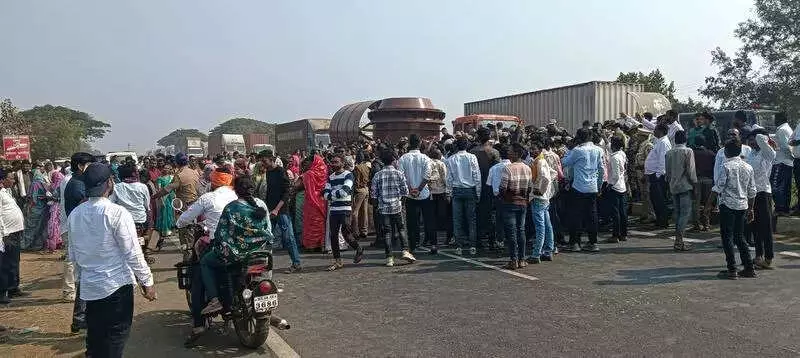
Republic Day Protests by Gosikhurd Dam PAP Families Turn Violent in Bhandara
The Republic Day celebrations in Bhandara district of Maharashtra were marred by escalating tensions as protests by families affected by the Gosikhurd dam project turned into a violent confrontation with police authorities. The agitation, which had been simmering for decades over unresolved rehabilitation issues, reached a boiling point when demonstrators blocked a national highway to press their long-pending demands, leading to a police lathicharge and widespread disruption.
Highway Blockade and Police Action
On January 26, project-affected persons (PAP) initiated their protest by climbing a water tank at the Pipri rehabilitation site located along the national highway. They alleged continued neglect of their grievances despite repeated representations to the administration. When no immediate response was forthcoming, hundreds of protesters took to the highway, blocking traffic for several hours. This move put immense pressure on the local administration throughout the day, as commuters and vehicles were stranded, causing significant inconvenience.
In an effort to clear the highway and restore normalcy, police resorted to a lathicharge, which further inflamed the situation and triggered additional tension among the protesters. The agitation was eventually called off only after officials provided written assurances addressing some of the concerns raised by the demonstrators. However, the use of force has sparked outrage, with MP Prashant Padole visiting the site to extend support to the protesters and demanding an apology from the police officers involved in the lathicharge.

Decades of Unresolved Rehabilitation Issues
The core of the protest lies in the unresolved rehabilitation issues that have plagued the Gosikhurd dam project-affected families for decades. Protesters have highlighted a range of demands, including:
- Enhanced compensation for the loss of land and livelihoods due to the dam's construction.
- Provision of basic civic amenities such as water, electricity, and sanitation in the rehabilitated village sites.
- Recognition of several villages affected by the dam's backwaters as officially project-affected, which would entitle them to benefits and support.
Despite multiple villages being impacted by submergence and the spread of backwaters, many have not been granted official project-affected status. This exclusion has left residents deprived of essential benefits and assistance, fueling deep-seated resentment. Additionally, many resettled villages continue to lack critical infrastructure, exacerbating the hardships faced by the displaced families.
Escalation of Agitation and Political Involvement
The recent protests are not an isolated incident but part of a prolonged struggle. In December, project-affected families launched a ‘jal samadhi' agitation in the Wainganga riverbed at Kardha, symbolically immersing themselves to draw attention to their plight. However, with no meetings held even weeks after the intervention of the guardian minister, the protesters felt compelled to intensify their agitation on Republic Day.
As the situation escalated, senior administrative and police officials rushed to the spot to manage the crisis. The police had to use force to control the crowd, leading to the lathicharge that has now become a focal point of controversy. The involvement of political figures like MP Prashant Padole underscores the broader implications of the issue, as he has publicly condemned the police action and called for accountability.
The written assurances from officials may have temporarily quelled the protests, but the underlying issues remain largely unaddressed. The families affected by the Gosikhurd dam project continue to seek justice and proper rehabilitation, highlighting the need for sustained dialogue and concrete action from the authorities to prevent future escalations.






