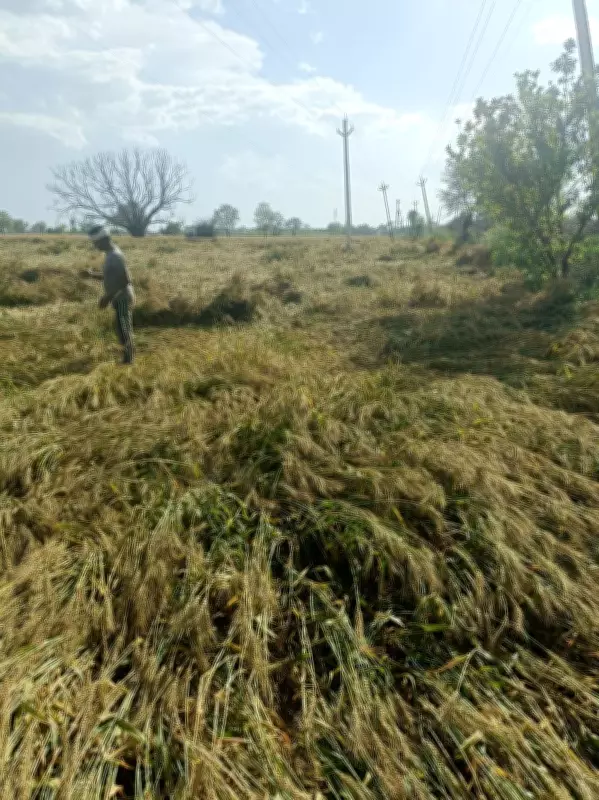
Hailstorm Wreaks Havoc on Haryana's Agricultural Heartland
A sudden and intense hailstorm has struck several districts in Haryana, inflicting severe damage to standing crops and sparking fears of substantial yield losses among the state's farming community. The unseasonal weather event, which occurred recently, has left fields battered and crops in disarray, raising alarms about potential financial distress for agricultural workers.
Extent of Damage and Affected Regions
The hailstorm impacted key agricultural areas, including parts of Karnal, Kurukshetra, and Ambala, where crops such as wheat, mustard, and vegetables were in advanced stages of growth. Initial reports indicate that the hailstones, some as large as marbles, pounded the fields, leading to widespread flattening of crops and breakage of plants. Farmers on the ground describe scenes of devastation, with many expressing helplessness as they assess the ruin of their hard work.
Local authorities have begun preliminary assessments, but the full scale of the damage is yet to be quantified. Early estimates suggest that thousands of hectares may have been affected, with yield losses potentially ranging from 30% to 50% in the hardest-hit zones. This comes at a critical time when crops were nearing harvest, exacerbating the economic impact on farming households.

Farmers' Concerns and Immediate Challenges
Farmers in Haryana are voicing deep anxiety over the financial repercussions of this natural disaster. Many rely heavily on these crops for their annual income, and the hailstorm threatens to derail their livelihoods. "We invested heavily in inputs like seeds and fertilizers, only to see it all destroyed in minutes," lamented one farmer from Karnal, highlighting the emotional and economic toll.
The immediate challenges include:
- Assessing and documenting crop damage for insurance claims.
- Managing soil and water issues post-storm to prevent further loss.
- Exploring alternative income sources to mitigate financial strain.
Additionally, there are concerns about market dynamics, as reduced yields could lead to price fluctuations for essential commodities, affecting both producers and consumers in the region.
Government Response and Support Measures
In response to the crisis, state agricultural departments have mobilized teams to evaluate the damage and provide assistance to affected farmers. Officials have urged farmers to report losses promptly to facilitate relief efforts, including potential compensation under crop insurance schemes. However, some farmers report delays and bureaucratic hurdles in accessing support, calling for more streamlined processes.
Experts emphasize the need for long-term strategies, such as improved weather forecasting and resilient crop varieties, to better prepare for such extreme weather events in the future. Climate change is increasingly linked to erratic weather patterns, making such incidents more frequent and severe.
Broader Implications for Agriculture in Haryana
This hailstorm underscores the vulnerabilities faced by Haryana's agricultural sector, which is a cornerstone of the state's economy. With agriculture contributing significantly to employment and GDP, such events can have ripple effects on rural economies and food security. Stakeholders are calling for enhanced disaster management frameworks and farmer-centric policies to cushion the blow from natural calamities.
As the community rallies to recover, the focus remains on supporting affected farmers and rebuilding resilience in the face of an unpredictable climate. The incident serves as a stark reminder of the challenges in sustaining agricultural productivity amid environmental uncertainties.