Jammu & Kashmir Assembly Descends into Chaos After Daily Wager Bill Rejection
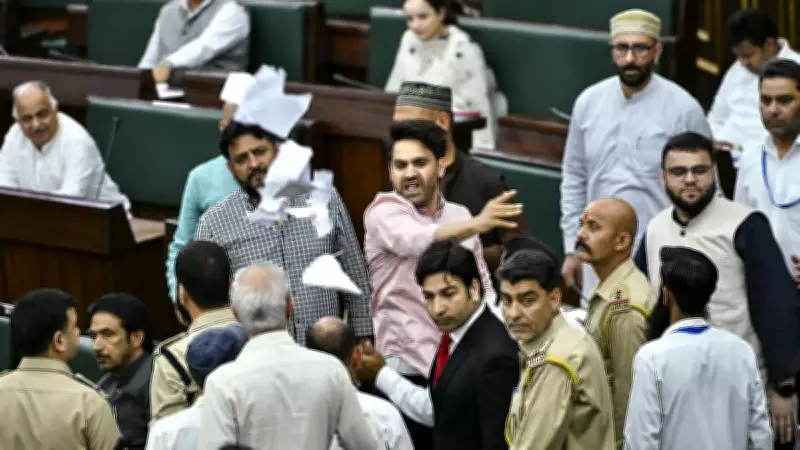
A session of the Jammu and Kashmir legislative assembly erupted into chaos and disorder on Tuesday, following the dramatic rejection of a crucial Private Members Bill. The proposed legislation aimed to provide regularization and permanent employment status to approximately one lakh daily wage workers across the union territory.
Voice Vote Seals Fate of Landmark Proposal
The bill, which had been tabled by opposition members, was met with immediate and fierce resistance from the Treasury Bench. After a brief but heated debate, the proposal was put to a decisive voice vote. The ruling coalition members vocally opposed the measure, leading to its formal rejection in the assembly. This procedural outcome effectively killed the bill, denying the possibility of regularization for the vast contingent of daily wagers.
Opposition Stages Protest and Mass Walkout
The rejection triggered an instant and volatile reaction from the opposition benches. Legislators from the Peoples Democratic Party (PDP) and other opposition groups rose in protest, condemning the government's stance as anti-worker and unjust. The scene quickly escalated into pandemonium, with raised voices and heated exchanges filling the chamber.

In a powerful display of dissent, the opposition members collectively staged a walkout, abandoning the proceedings in protest against the bill's failure. This mass exit underscored the deep political divide over the issue of employment security for temporary government workers.
Core Issue: The Plight of One Lakh Daily Wagers
At the heart of the controversy lies the long-standing demand of nearly 100,000 individuals employed on a daily wage basis in various government departments across Jammu and Kashmir. These workers, often engaged in essential services, have been campaigning for years to secure permanent positions, regular salaries, and associated job benefits.
The Private Members Bill represented a legislative attempt to address their grievances by creating a framework for their absorption into the permanent workforce. Its rejection is seen as a significant setback for this large group of employees and their families.
Political Fallout and Accusations
Following the walkout, opposition leaders accused the ruling government of being insensitive to the welfare of common workers and failing to address chronic unemployment issues. They argued that the regularization of daily wagers is not only a matter of economic justice but also crucial for administrative efficiency.
Government representatives, on the other hand, defended the decision, suggesting the bill required more detailed financial and administrative scrutiny. They indicated that alternative mechanisms might be considered outside the legislative process, though no concrete proposals were immediately announced.
The incident has intensified political tensions in the region, highlighting the contentious nature of labor and employment policy. It remains to be seen whether the government will propose a new initiative to address the demands of the daily wager community or if the issue will continue to fuel legislative discord.