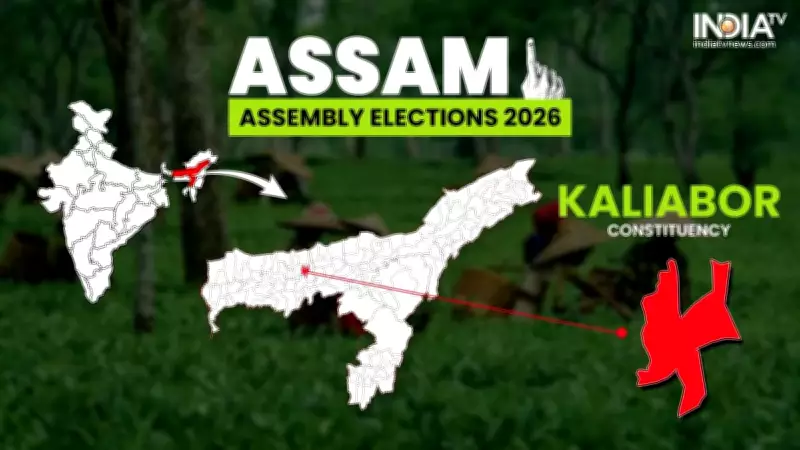
Kaliabor Assembly Constituency: A Strategic Preview for 2026 Assam Elections
The Kaliabor assembly constituency in Assam is emerging as a critical battleground for the upcoming 2026 state legislative elections. This constituency, located in the Nagaon district, has a rich political history and is poised to witness intense competition among major political parties including the Bharatiya Janata Party (BJP), Indian National Congress, Asom Gana Parishad (AGP), and the All India United Democratic Front (AIUDF).
Historical Performance and Past Winners
Kaliabor has traditionally been a stronghold for the Indian National Congress, with the party securing victories in multiple elections over the decades. However, the political landscape has shifted significantly in recent years, reflecting broader changes in Assam's electoral dynamics. In the 2021 Assam Assembly elections, the constituency saw a closely contested race, with the incumbent candidate from Congress defending the seat against a formidable challenge from the BJP-led alliance.
The victory margins in Kaliabor have varied, often depending on voter turnout, local issues, and alliance strategies. For instance, in previous elections, the winning candidate secured the seat by a margin of several thousand votes, highlighting the constituency's competitive nature. Detailed analysis of past results shows that factors such as demographic shifts, development projects, and regional sentiments play a crucial role in determining outcomes.
Party-Wise Candidates and Strategies for 2026
As the 2026 elections approach, political parties are expected to announce their candidates for Kaliabor, with each aiming to capitalize on their strengths and address voter concerns. The BJP, which has been expanding its presence in Assam, is likely to field a candidate with strong local connections, possibly in alliance with the AGP to consolidate the non-Congress vote.
The Congress, on the other hand, will focus on retaining its traditional support base by highlighting its past contributions and promising continued development. The AGP, as a regional party, may leverage its identity politics to attract voters, while the AIUDF could target specific minority communities, adding another layer to the electoral contest.
Potential strategies include:
- BJP: Emphasizing national schemes and infrastructure projects to appeal to a broader electorate.
- Congress: Campaigning on local governance issues and historical legacy in the region.
- AGP: Focusing on Assamese cultural identity and regional autonomy.
- AIUDF: Addressing the concerns of minority groups through targeted welfare promises.
Key Factors Influencing the 2026 Election
Several factors will shape the outcome in Kaliabor for the 2026 Assam polls. Voter demographics, including age distribution and community composition, are critical, as younger voters and diverse ethnic groups may sway the results. Economic issues, such as employment opportunities and agricultural support, are likely to be top priorities for residents.
Additionally, the impact of national policies and state-level initiatives will be closely watched. For example, implementation of central government schemes and state development projects could influence public perception. The margin of victory in past elections suggests that even small shifts in voter sentiment can lead to significant changes, making grassroots campaigning and alliance management essential for success.
In conclusion, the Kaliabor assembly constituency is set to be a focal point in the 2026 Assam elections, with multiple parties vying for dominance. By understanding its historical context and current dynamics, stakeholders can better navigate the upcoming electoral battle, which promises to be both competitive and consequential for Assam's political future.