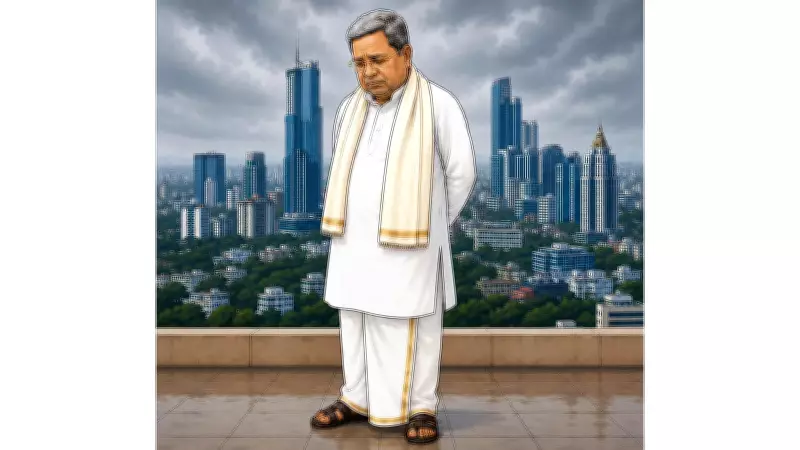
The Congress party's decision to change the Chief Minister of Karnataka midstream is an attempt to blunt the state's anti-incumbency instincts. However, this move is unlikely to address the deep regional inequalities that persist in the state. Additionally, observers caution that the former Chief Minister is unlikely to remain politically passive.
Why the Midstream Change?
The Congress leadership calculated that a new face at the helm could help mitigate the anti-incumbency sentiment that often plagues incumbent governments. Karnataka has historically been a state where voters have frequently punished ruling parties for perceived failures. By replacing the Chief Minister before the next elections, Congress hopes to reset the narrative and present a fresh image to the electorate.
Regional Inequalities Remain Unaddressed
However, the change in leadership does little to tackle the fundamental issue of regional disparities within Karnataka. The state is characterized by significant economic and developmental gaps between its northern and southern regions, as well as between urban and rural areas. These inequalities have been a persistent challenge, and experts argue that a mere change of the Chief Minister will not resolve them.

The North-South Divide
The northern districts of Karnataka have lagged behind in terms of infrastructure, education, and industrial development compared to the southern and coastal regions. This divide has fueled political tensions and demands for special status for certain areas. The new Chief Minister will need to implement targeted policies to bridge this gap, but the Congress party's internal dynamics may hinder such efforts.
Ex-CM's Political Future
Political analysts also warn against assuming that the former Chief Minister will fade into the background. Having held the top post, the ex-CM retains significant influence within the party and among regional leaders. He or she may leverage this network to remain a key player in Karnataka politics, potentially creating friction with the new Chief Minister. The Congress party must manage this transition carefully to avoid internal strife that could further undermine its electoral prospects.
Broader Implications
The move reflects a broader trend in Indian politics where parties frequently rotate leaders to manage anti-incumbency. However, such strategies often provide only short-term relief. For lasting change, parties must focus on governance and addressing structural issues like regional inequality. In Karnataka's case, the midstream change may buy Congress some time, but it is no substitute for a comprehensive development agenda.