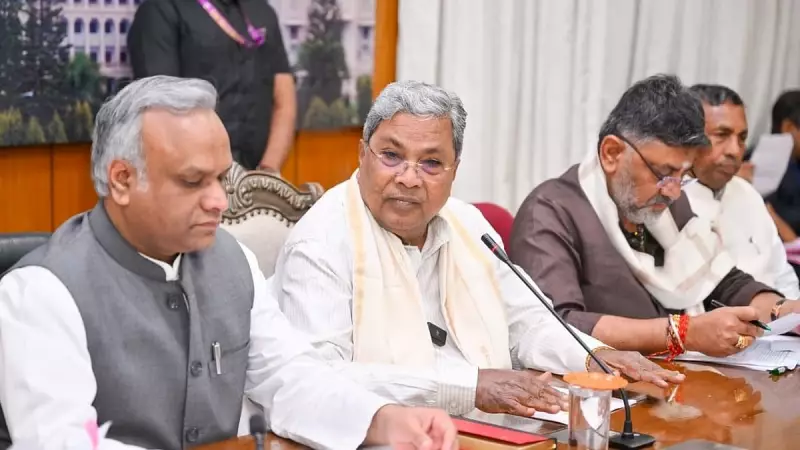
Karnataka Chief Minister Siddaramaiah has issued a strong appeal to the central government, urging it to immediately release pending funds for the Mahatma Gandhi National Rural Employment Guarantee Act (MGNREGA) scheme. He has also demanded the withdrawal of the Gram Rozgar Abhiyaan Mobile Application (G-RAM) system, which he claims is severely hampering the implementation of the crucial rural jobs program.
A Dire Warning on Rural Employment
In a detailed letter addressed to Union Rural Development and Panchayat Raj Minister Giriraj Singh, the Chief Minister painted a grim picture of the situation on the ground. He stated that the introduction of the G-RAM application has created significant operational hurdles. The mandatory use of the app for preparing annual labour budgets and work estimates has led to widespread confusion and technical difficulties among field officials.
Siddaramaiah emphasized that these bureaucratic and technological obstacles are directly impacting the livelihoods of millions of rural workers who depend on MGNREGA. He warned that if the current issues are not resolved swiftly, the state could face a severe crisis in providing the legally guaranteed 100 days of wage employment to its rural households.
The Core Demands to the Centre
The Chief Minister's letter outlined two primary demands for the Union government. First, he called for the immediate withdrawal of the G-RAM system, arguing that it is impractical and disruptive in its current form. He suggested that the central government should revert to the previous, more functional methods of planning and fund allocation until a robust and user-friendly digital system is developed.
Second, Siddaramaiah pressed for the release of pending central funds for the MGNREGA scheme. He highlighted that delays in fund disbursement from the Centre are crippling the state's ability to pay wages on time and take up new projects. This financial bottleneck, combined with the G-RAM issues, is creating a perfect storm that threatens to undermine the entire social safety net.
Impact on Karnataka's Rural Poor
The MGNREGA scheme is a vital source of income for Karnataka's rural population, especially during agricultural lean seasons and times of drought. Siddaramaiah pointed out that the state has consistently been a top performer in implementing the scheme, effectively utilizing funds to create durable assets and provide employment.
However, the new challenges posed by the G-RAM app and fund delays are reversing this progress. The technical glitches are causing delays in project approval and work commencement. Consequently, workers are being deprived of timely employment, and the state's rural infrastructure development is suffering. The Chief Minister framed this not just as an administrative issue, but as a matter of justice and rights for the rural poor.
The Political and Administrative Standoff
This appeal adds to the ongoing tussle between the Congress-led state government in Karnataka and the BJP-led central government over financial resources and scheme implementation. Siddaramaiah's letter is a formal escalation of the state's grievances regarding centrally sponsored schemes.
The state government argues that it is being unfairly constrained by central directives that are poorly designed and by the withholding of rightful funds. The demand to scrap G-RAM is particularly significant, as it represents a direct challenge to a digital governance initiative of the Centre, labeling it as counterproductive.
The ball is now in the court of Union Minister Giriraj Singh and the Ministry of Rural Development. How the Centre responds to these demands will have immediate repercussions for lakhs of MGNREGA workers in Karnataka and could set a precedent for other states facing similar issues. The situation underscores the critical need for coordination and practical problem-solving between state and central authorities to protect India's largest rural employment guarantee program.