

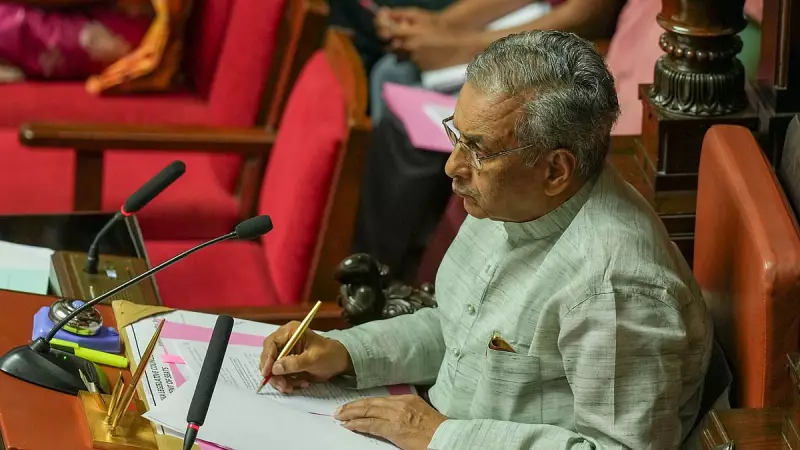
A session of the Karnataka Legislative Council witnessed a sharp political confrontation on Tuesday, with the ruling Congress and the opposition BJP trading accusations over the use of loudspeakers during the Islamic call to prayer, known as Azaan.
Heated Exchange Over Noise Disturbance
The debate was sparked by BJP MLC N. R. Arun Singh, who raised the issue of alleged noise pollution caused by loudspeakers from religious places. Arun Singh claimed that residents are afraid to complain about the disturbance caused by early morning Azaan announcements because, in his view, "they have government support." This pointed remark was seen as a direct attack on the Congress-led state administration, implying it was showing favouritism.
Government's Firm Rebuttal
State ministers from the ruling party swiftly countered the allegations. They defended the rights of all communities to practice their religious rituals while also asserting that the government enforces noise pollution rules uniformly. The ministers accused the BJP of attempting to communalize a matter of civic regulation and create unnecessary social tension for political gain. The session, dated 16 December 2025, became a platform for this intense war of words.

Underlying Political Tensions
This incident highlights the ongoing and sensitive political discourse in Karnataka surrounding religious practices and civic norms. The loudspeaker issue has been a recurring point of contention in various parts of India. In this instance, it provided fuel for the opposition to challenge the government's governance and impartiality. The exchange underscores the deep political divisions in the state assembly, where such debates often extend beyond administrative concerns into broader socio-political narratives.
The fallout from this council session is likely to add to the existing political friction in Karnataka. It places the state government in a position where it must carefully balance religious freedoms with environmental laws, all under intense public and political scrutiny. The event signals that similar debates may arise in future legislative meetings, keeping the issue alive in the public domain.






