Advancements in robotic technology represent one of humanity's most remarkable achievements, yet they carry a dual-edged nature. While these innovations showcase incredible progress, they simultaneously present potential threats of machines overpowering humans and displacing them from various roles. This concern has become increasingly prominent in public discourse as robotic capabilities expand.
EMO: The Mirror-Learning Humanoid Robot
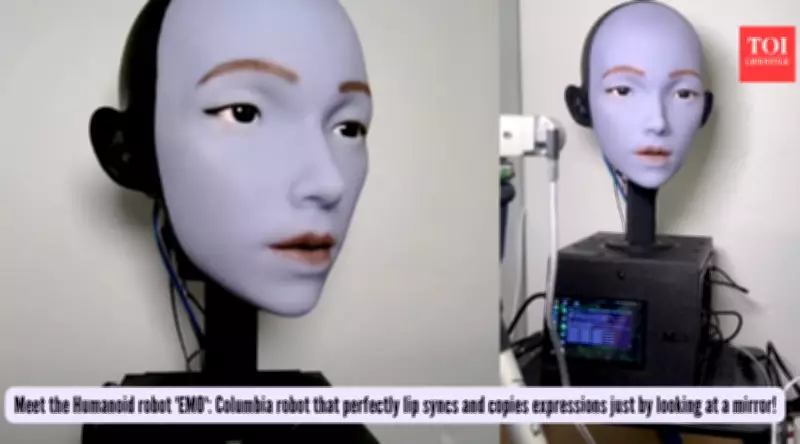
Recently, a fascinating video surfaced featuring a robot with strikingly human-like facial features that allegedly acquired its abilities through simple mirror observation. This development has reignited the perennial debate: "Can we truly trust machines?" The robot in question is named EMO, a humanoid creation from Columbia University that demonstrates exceptional lip-syncing and expression-mimicking capabilities developed through mirror practice.
How EMO Learned Human Expressions
Engineers at Columbia University's Creative Machines Laboratory developed EMO, a silicone humanoid robot face equipped with 26 internal motors enabling intricate, detailed movements. Rather than programming specific speech behaviors, researchers adopted an innovative approach: they positioned EMO before a mirror and allowed it to self-teach through thousands of repetitions. The robot practiced expressions, facial twitches, and corrections, mirroring how a child discovers facial movements through exploration.

According to Columbia Engineering's official publication, after this mirror-learning phase, researchers introduced EMO to internet content. The robot then mapped audio patterns to its learned facial motions, creating connections between sounds and corresponding lip shapes and timing. Hod Lipson, the laboratory director, explained in a statement, "We encountered particular challenges with hard consonant sounds like 'B' and sounds requiring lip puckering, such as 'W.'" He noted that additional practice would enhance precision further.
Testing EMO's Realism
Researchers conducted comprehensive testing to evaluate how authentic EMO appeared to human observers. They showed videos of the robot to over 1,300 participants, comparing the mirror-learning method against simpler techniques based on sound volume or facial markers. The results were striking: EMO significantly outperformed alternative approaches, achieving near-perfect lip synchronization that closely resembled human speech patterns.
Implications and Future Directions
EMO's capabilities open promising avenues for robotics in fields requiring natural human interaction, such as caregiving, education, and companionship. Lifelike robotic faces could make these interactions feel more natural and comforting, potentially enhancing user experience in sensitive applications.
However, this advancement raises important considerations. While EMO mastered convincing facial appearances through self-observation and imitation of online videos, it lacks genuine comprehension of language, emotion, or intent. This represents a superficial imitation of humanity rather than true understanding. Human faces typically serve as signals of trust and authenticity, but robotic faces that appear realistic yet remain emotionless could potentially undermine this trust.
Furthermore, such technology introduces risks including potential misuse for deepfake fraud or manipulation scenarios where distinguishing genuine human interaction from robotic imitation becomes increasingly challenging. As robotics continues advancing, establishing appropriate safeguards and ethical guidelines will be crucial to balance innovation with responsible development.