Kerala Government Questions Intent Behind Union Budget's Rare Earth Corridor Proposal
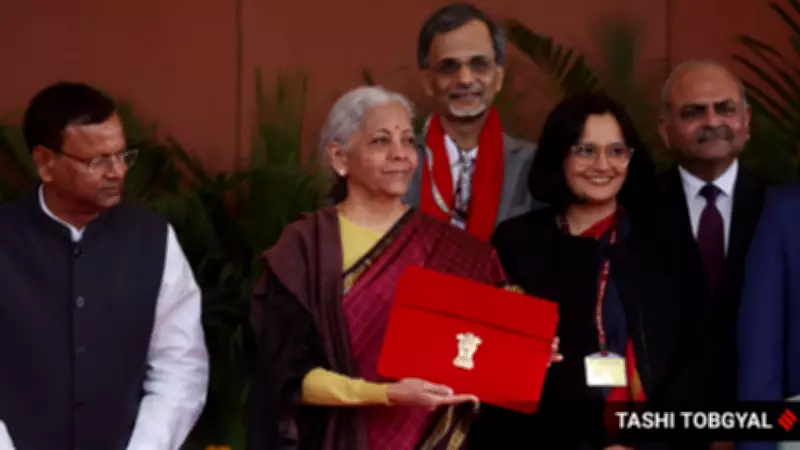
In a significant development following the Union Budget 2026-27 presentation, the CPI(M)-led Left Democratic Front (LDF) government in Kerala has raised serious questions about the proposed establishment of dedicated rare earth corridors. Finance Minister Nirmala Sitharaman announced during her Budget speech that the central government would support mineral-rich states including Odisha, Kerala, Andhra Pradesh, and Tamil Nadu to create these specialized corridors aimed at promoting mining, processing, research, and manufacturing activities.
Concerns Over Resource Exploitation and State Control
Kerala Industries Minister P Rajeeve expressed skepticism about the proposal's underlying intentions, stating that the state government needs to carefully examine whether this initiative is designed to exploit Kerala's valuable mineral resources. "We have to see whether it is meant to exploit Kerala's rare earth and minerals and to take the wealth out of the state," Rajeeve emphasized during his response to the Union Budget announcement.
The minister pointed to proposed amendments that would potentially enable the central government to take direct control of mineral auctions, raising concerns about state sovereignty over its natural resources. "Certain amendments have been proposed which will help the Centre take direct control of the auction of minerals. Hence, we have to examine whether this proposal for the corridor is to take control over the minerals which are in the custody of the state," Rajeeve explained, highlighting the need for thorough scrutiny of the central government's plans.

Kerala's Existing Rare Earth Initiatives
Interestingly, the Kerala government had already announced its own rare earth corridor initiative in the state Budget presented just days before the Union Budget. Finance Minister K N Balagopal revealed plans for a comprehensive 'Rare Earth Corridor' connecting strategic locations across Kerala's coastline, which is known to be abundant with valuable rare earth elements.
The proposed state corridor would connect:
- Vizhinjam port
- Chavara in Kollam district
- Kochi industrial hub
Balagopal highlighted the strategic importance of Kerala's mineral wealth, noting that the coastal region contains essential elements like thorium and scandium that are crucial for space research, defense applications, energy generation, aviation, electric vehicle production, drone manufacturing, and medical equipment such as CT scanners.
Substantial Investments and Employment Opportunities
The Kerala government's rare earth initiative comes with significant economic projections. According to state Budget announcements:
- An investment of approximately Rs 42,000 crore is expected
- Around 50,000 new job opportunities are projected to be created
- Kerala aims to establish itself as the nation's permanent magnet hub
Additionally, the state has earmarked Rs 100 crore to establish a Rare Earth Critical Minerals Mission through a collaborative partnership involving Kerala Mineral and Metals Limited (KMML), KELTRON (both state government undertakings), and the Non-Ferrous Materials Technology Development Centre under the Union Ministry of Mines.
Contrasting Approaches to Mineral Development
The situation reveals contrasting approaches between the central and state governments regarding rare earth mineral development. While the Union Budget proposes a broader regional corridor involving multiple states, Kerala has already formulated a specific, value-added approach focused on maximizing benefits within the state.
Rajeeve emphasized that Kerala's corridor plan is specifically designed around value addition rather than mere extraction, suggesting a fundamental difference in philosophy between the state and central proposals. This divergence raises important questions about federalism, resource control, and development priorities in India's mineral-rich regions.

The debate highlights the complex interplay between state rights and central initiatives in natural resource management, particularly concerning strategically important minerals that have significant implications for national security, technological advancement, and economic development.