Kerala's Political Landscape: The Unseen Power of Caste and Religious Outfits
In the traditionally bipolar arena of Kerala politics, where the Bharatiya Janata Party (BJP) is striving to make significant inroads, a crucial yet often overlooked dynamic involves major community organizations representing diverse caste and religious interests. With the Assembly elections just months away, these outfits are increasingly attempting to influence state politics as caste and religious questions dominate the electoral discourse.
The Role of Influential Caste Organizations
Among Kerala's most powerful caste groups are the Nair Service Society (NSS) and the Sree Narayana Dharma Paripalana (SNDP) Yogam. Recent appeals by NSS general secretary Sukumaran Nair and SNDP leader Vellappally Natesan for Hindu unity, coupled with their expressed support for the CPI(M)-led Left Democratic Front (LDF), have generated considerable political ripples. These developments coincide with controversial statements from two CPI(M) leaders that were perceived as attempts to polarize the electorate along communal lines.
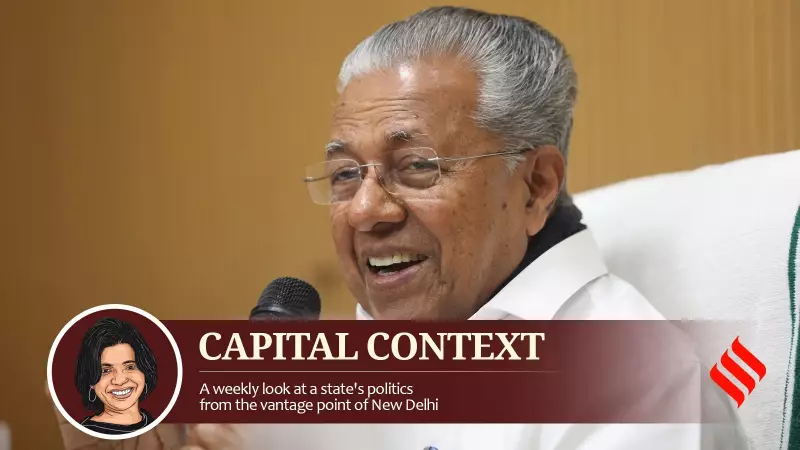
Earlier this month, former state minister A K Balan alleged that if the Congress-led United Democratic Front (UDF) returned to power, the Home Department would effectively be controlled by the Jamaat-e-Islami Hind, potentially leading to communal violence reminiscent of the 2002 Marad incident in Kozhikode. Despite facing backlash from both the Congress and the Jamaat, Chief Minister Pinarayi Vijayan publicly defended his party colleague.

Subsequently, state minister Saji Cheriyan ignited controversy by linking local body election results in Muslim-dominated areas like Kasargode and Malappuram to communal polarization, suggesting that the winners' names alone indicated a trend. Although the CPI(M) leadership initially remained silent, internal and external criticism forced Cheriyan to retract his comments, with the party cautioning its leaders against making such remarks.
Shifting Alliances and Strategic Calculations
In recent months, Vellappally Natesan has demonstrated a quiet shift towards the CPI(M), particularly aligning with Chief Minister Pinarayi Vijayan. Natesan, representing the backward Ezhava community, publicly predicted that Vijayan would secure an unprecedented third term in office. This growing proximity between the Chief Minister and a leader known for criticizing the Indian Union Muslim League (IUML), a key UDF constituent, has also created discomfort within the CPI(M)'s alliance with the CPI.
Interestingly, Natesan's son, Thushar Vellappally, continues to lead the SNDP's political arm, the Bharath Dharma Jana Sena, which remains part of the BJP-led National Democratic Alliance (NDA). In a significant development, the BJP-led central government announced on Sunday that Natesan would be awarded the Padma Bhushan, adding another layer to the complex political equations.
For the CPI(M), securing the support of these influential caste organizations is crucial for consolidating the Hindu vote, which constitutes approximately 55% of Kerala's population according to the 2011 Census. This strategic move comes after the party failed to attract Muslim votes in the 2024 Lok Sabha elections despite making the Citizenship Amendment Act a central campaign issue. Meanwhile, the Christian vote is expected to largely remain with the UDF, though the CPI(M) aims to prevent Ezhavas from firmly mobilizing behind the BJP.
The Sabarimala Factor and Electoral Vulnerabilities
The CPI(M)'s courtship of caste groups coincides with the BJP's attempts to leverage the Sabarimala gold scandal as an electoral issue. Prime Minister Narendra Modi recently declared at a Kerala rally that a BJP government would ensure the imprisonment of those allegedly involved in the theft. The Left party appears vulnerable on this front, as the High Court-constituted Special Investigation Team (SIT) has implicated the Devasom Board, presided over by CPI(M) leaders, with two former board presidents already incarcerated.
In 2019, following the controversy surrounding the Supreme Court's ruling allowing women of menstruating age to enter Sabarimala, the Vijayan government suffered a setback in parliamentary elections due to its stance on the issue. This time, the administration hopes to mitigate any potential damage through the support of the SNDP and NSS.

Muslim Outfits and Their Political Influence
In a state where Muslims comprise an estimated 27% of the population, the support of the Jamaat-e-Islami Hind has been a contentious issue between the LDF and UDF. While the Congress-led alliance received the Jamaat's backing in recent local body polls, its political wing, the Welfare Party of India (WPI), has previously supported the Left on multiple occasions. The WPI contested local body elections with the Left in 2015 but allied with the UDF in 2020, securing 75 seats in recent civic polls.
Although the CPI(M) has criticized the Congress for accepting the Jamaat's support—with Vijayan alleging that the outfit's core ideology is fundamentally opposed to secularism and democracy—the presence of state minister V Abdurahiman and MLA Daleema Jojo at separate Jamaat functions provided the Congress with ammunition to counter these accusations.
Beyond its direct political footprint, the Jamaat plays a significant role in shaping the socio-political perspectives of the minority community through its television channel, newspaper, and literary publications in English and Urdu. Another influential voice in Kerala's Muslim community is A P Aboobacker Musliyar, also known as Kanthapuram, who heads the AP faction of Samastha Kerala Jem-iyyathul Ulama, an organization of Sunni scholars. He is a vocal critic of the Jamaat, accusing it of pursuing the ideological goal of establishing an Islamic nation.
The Christian Vote and Emerging Dynamics
The Christian community, constituting approximately 18% of Kerala's population, has historically aligned with the UDF in past elections, though it has shown support for the Left in certain pockets. However, the BJP has emerged as another contender, focusing on Christian outreach since the Lok Sabha elections, where it managed to secure one constituency in the state.
In a significant blow to the UDF, the Kerala Congress (Mani), a party backed by Christians and a long-standing UDF constituent, recently joined the LDF. This move has raised questions about the future direction of the Christian vote. In recent years, the Christian Association and Alliance for Social Action (CAASA), which claims support from 17 Christian denominations, has also gained prominence. Critics accuse CAASA of leaning towards the RSS and BJP, noting that it often shares anti-Muslim sentiments with Hindu outfits, though recent local body elections did not indicate substantial impact from the organization.
Amid these shifting alliances, the entry of garment major KITEX's party Twenty20, led by managing director Sabu M Jacob, into the NDA is viewed by some as the BJP's strategic attempt to attract a section of Christian voters.
As Kerala's political landscape evolves, the intricate interplay between caste and religious organizations continues to shape electoral strategies and voter mobilization efforts, though the precise measure of their impact on voting choices remains an open question.