

Kolkata Auto Fare Hike Sparks Commuter Shift to Buses for Short Trips
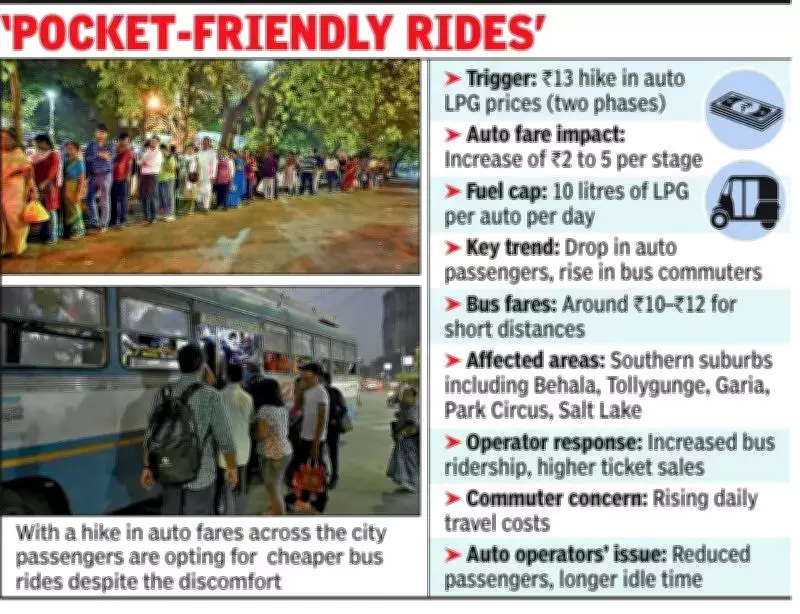
A significant increase in auto-rickshaw fares across Kolkata has triggered a noticeable change in commuting patterns, with passengers increasingly opting for buses for short-distance travel. This shift comes after a steep hike in auto LPG prices, which rose by Rs 13 in two phases this month, prompting most auto routes to revise their fares upward.
Impact on Commuters and Auto Stands
The impact of the fare revision was evident on Tuesday, as long queues at auto stands across the city virtually disappeared. Commuters traveling short distances of 3 to 5 kilometers are now choosing cheaper bus rides over autos. Soumen Mondal, a commuter from Behala to Deshapriya Park, expressed his frustration: "It is impossible to pay Rs 30 to 35 for a four-kilometer ride every day. I would rather take a bus for Rs 10. The discomfort is manageable if I can save money."
Trade Union Resistance and Operational Strains
The fare revision followed weeks of resistance from trade unions, especially in poll-bound Kolkata. However, mounting pressure from auto route committees, many of which have allegiance to AITUC, eventually forced unions to concede to the hike. Adding to the operators' concerns is a cap on fuel allocation, now limited to 10 liters of LPG per auto per day, further straining their operations.

Surge in Bus Ridership
Bus operators are witnessing a substantial surge in ridership as a result of this shift. Tickets priced at Rs 10 are selling briskly, particularly on routes that overlap with auto corridors in the southern suburbs. An operator of route 235 reported: "Our daily ticket sales used to hover between Rs 7,800 and Rs 8,500, but in the past two days, it has crossed Rs 9,000. Most of the increase is from short-distance commuters who earlier preferred autos."
Operators on route 21/1 observed a similar trend. Another operator noted: "Usually, bus and auto passengers are different groups. But now we are seeing many commuters switching from autos, especially between Behala and Rashbehari or Rabindra Sarobar Metro. This is more evident during non-peak hours when fewer autos are available."
Cost and Reliability as Decisive Factors
For daily commuters, cost and reliability are becoming decisive factors in their travel choices. Surajit Manna, who travels between Behala Chowrasta and Tollygunge, explained: "The auto fare has gone up to Rs 24, and even then the waiting time is long. The bus costs me Rs 11. I don't mind standing if I reach on time."
Adverse Effects on Auto Drivers
This shift has adversely affected auto drivers, many of whom report a sharp drop in passengers. Kaushik Sardar, an auto operator on the Beleghata–Sealdah route, shared his concerns: "At least half of our day is getting wasted every alternate day."
Potential Reshaping of Transit Dynamics
Transport planner Anirban Ghosh highlighted the broader implications: "If this continues, it could reshape the dynamics between Kolkata's para-transit systems and public buses, especially for short-distance travel." This trend underscores the delicate balance between affordability and convenience in urban commuting, with potential long-term effects on Kolkata's transport ecosystem.






