Maharashtra Government Approves Free Regularization of Small-Scale Government Land Encroachments
In a landmark decision aimed at bolstering housing security for economically disadvantaged citizens, the Maharashtra government has officially sanctioned the regularization of residential encroachments on government-owned land. This progressive policy, which applies to encroachments measuring up to 500 square feet, will be implemented entirely free of cost, offering substantial relief to lakhs of low-income families throughout the state.
Policy Details and Eligibility Criteria
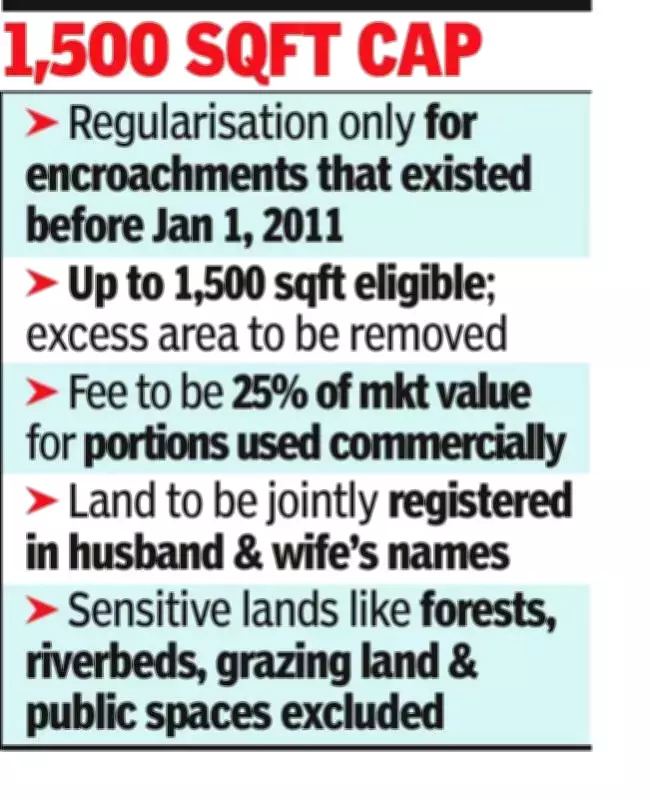
The initiative, announced by Revenue Minister Chandrashekhar Bawankule under directives from Chief Minister Devendra Fadnavis, specifically targets encroachments that were in existence on or before January 1, 2011. It is strictly limited to structures used for residential purposes only, with the notable exclusion of Mumbai and Mumbai suburban districts from the scheme's purview.
"It is the government's firm stand that no needy family in the state should remain without shelter," emphasized Bawankule in an official media statement. He further revealed that the progress of this ambitious program will undergo comprehensive reviews every three months to ensure effective implementation and timely adjustments as needed.

Fee Structure and Area Limitations
According to the detailed government resolution, encroachments exceeding the 500 square feet threshold will incur an occupancy fee equivalent to 10% of the prevailing market value of the land. The maximum eligible area for regularization has been capped at 1,500 square feet, with any construction beyond this limit subject to mandatory removal.
For structures that incorporate partial commercial usage, the policy mandates a charge of 25% of the market value specifically for the commercial portion. This nuanced approach ensures fairness while discouraging mixed-use violations of the residential focus.
Ownership and Registration Procedures
The land regularization will be granted jointly in the names of both husband and wife under the 'occupancy class-2' category, promoting gender-inclusive property rights. A nominal registration fee of Rs 1,000 has been established for plots measuring up to 1,000 square feet, making the process financially accessible.
Authorities have instituted rigorous scrutiny protocols to prevent non-citizens from benefiting from the scheme. Officials have been directed to file formal police complaints in cases of violations, underscoring the government's commitment to maintaining the integrity of the program.
Environmental and Social Exclusions
The regularization policy explicitly excludes encroachments located on ecologically or socially sensitive lands. This comprehensive exclusion encompasses:
- Riverbeds and water bodies
- Grazing lands and forest areas
- Public roads and transportation corridors
- Cremation grounds and burial sites
- Playgrounds and recreational spaces
- Land reserved for schools, hospitals, and other public institutions
Families residing in such excluded locations will instead be considered for alternative housing solutions under the Pradhan Mantri Awas Yojana, ensuring they are not left without viable options.
Documentation Requirements and Verification Process
To qualify for regularization, applicants must provide conclusive proof of residence predating January 1, 2011. Acceptable documentation includes:
- Voter lists and electoral rolls
- Historical electricity bills
- Property tax receipts and payment records
- Other government-issued identification documents
Additionally, applicants must demonstrate continuous residence at the location for at least the preceding year through supplementary evidence, creating a robust verification framework.
Implementation Framework and Oversight Mechanisms
The execution of this extensive regularization program will be managed through a multi-tiered committee structure designed to streamline decision-making and minimize bureaucratic delays. This hierarchical framework includes:

- District-level committees led by guardian ministers with 17-member panels
- Sub-divisional committees overseen by sub-divisional officers
- Tehsil-level committees managed by tehsildars
- Constituency-level committees for localized oversight
This comprehensive administrative structure, spearheaded by district collectors, is expected to expedite processing while maintaining accountability throughout the implementation phase.
Broader Context and Expert Perspectives
Revenue officials have highlighted that this initiative aligns with broader national and global efforts to formalize informal housing arrangements and expand property rights for urban and rural impoverished populations. While the policy promises significant tenure security for vulnerable communities, housing experts emphasize that its ultimate success will depend on transparent implementation practices and meticulous exclusion of environmentally sensitive zones from the regularization process.
The Maharashtra government's decisive action represents a substantial step toward addressing the chronic housing challenges faced by low-income families, potentially serving as a model for other states grappling with similar informal settlement issues across India.