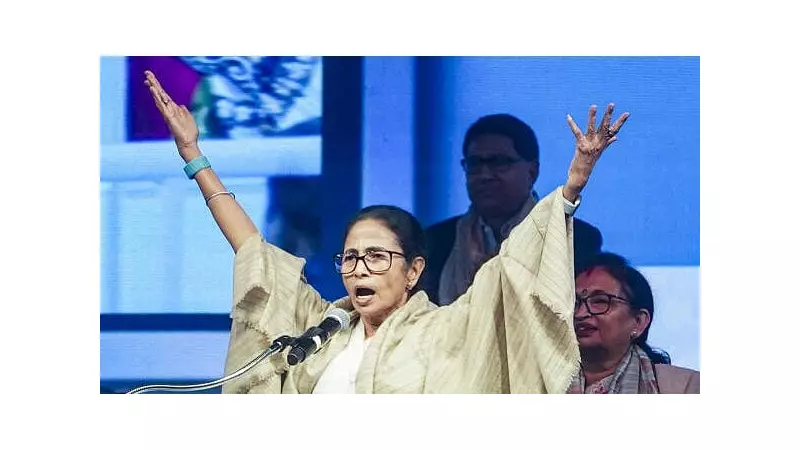
West Bengal Chief Minister Mamata Banerjee has declared that she will approach the judiciary on Tuesday, taking a firm legal stand against what she describes as the 'inhumane' conduct of officials during the ongoing revision of voter lists in the state. The announcement, made on Monday, sets the stage for a significant political and legal confrontation in the run-up to the crucial assembly elections.
Allegations of Arbitrary Actions in Voter List Purge
Banerjee, who leads the Trinamool Congress party, leveled serious accusations against the administration handling the Special Intensive Revision (SIR) of electoral rolls. She asserted that a large number of names are being "arbitrarily struck off" the voter lists without any valid or justifiable reason being provided to the citizens. According to her, this opaque process has transformed what should be a routine administrative exercise into a mechanism that sows confusion and apprehension among the electorate.
The Chief Minister emphasized that the right to vote is a fundamental democratic right, and any tampering with the voter list undermines the very foundation of free and fair elections. Her decision to move court on Tuesday, January 6, 2026, underscores the severity of the allegations and her intent to seek judicial intervention to halt the alleged malpractice.
Creating a Climate of Fear Ahead of Polls
Banerjee argued that the manner in which the revision is being conducted is not just an administrative failure but a deliberate act to disenfranchise voters. She stated that the arbitrary deletion of names is creating a pervasive source of fear and uncertainty among the public just before the assembly elections. This, she implied, could have a direct impact on the electoral outcome if not checked immediately.
The timing of the revision, closely preceding the elections, adds a layer of political sensitivity to the issue. Political analysts suggest that such controversies over voter lists are not uncommon in Indian elections, often leading to heated exchanges between ruling parties and the opposition over the integrity of the electoral process.
Implications and the Road Ahead
The impending court case is expected to bring the procedures of the Special Intensive Revision under judicial scrutiny. The outcome could have significant implications for the Election Commission's operations in West Bengal and set a precedent for how similar grievances are addressed in other states.
Banerjee's move is seen as a strategic effort to rally her political base and highlight what she frames as an attack on democratic rights. It puts the spotlight firmly on the electoral preparation process, making the integrity of the voter list a central issue in the pre-election discourse. As the state gears up for the polls, this legal challenge adds a new dimension to the already intense political battleground of West Bengal.