Mamata Banerjee's Multifaceted Artistic Expression: A Political and Cultural Strategy
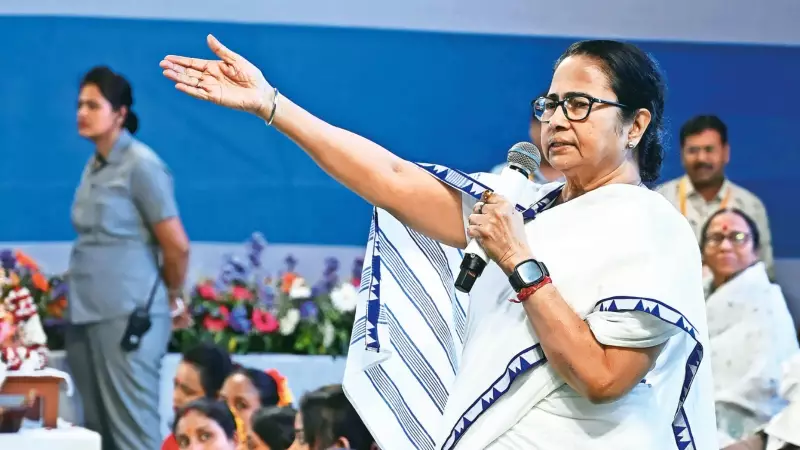
West Bengal Chief Minister and Trinamool Congress chief Mamata Banerjee continues to showcase her prolific artistic talents, blending political messaging with cultural expression. On the occasion of Saraswati Puja, Banerjee released a song on social media platform X, highlighting her dual role as a politician and creative artist.
Saraswati Puja Song Release and Poetic Protest
As devotees across West Bengal celebrated Saraswati Puja, Banerjee shared a song performed by Trinamool Congress MP and professional singer Aditi Munshi. The Chief Minister revealed that she personally wrote the lyrics and composed the music for this festive track. The opening stanza, translated from Bengali, expresses aspirations for youth empowerment: "On this Basant Panchami, may the youth surge forward with renewed energy, break down every barrier and obstacle, and tear despair to shreds."
This artistic offering followed her revelation just one day earlier at the Kolkata International Book Fair inauguration. Banerjee disclosed that she has penned 26 poems specifically targeting the Special Intensive Revision (SIR) of electoral rolls, which her party alleges attempts to disenfranchise voters. Remarkably, these poems were composed during helicopter travels between engagements over just two days, focusing on what she describes as "the harassment and suffering faced by common people due to SIR."

Expanding Literary Portfolio and Political Themes
Banerjee's literary output continues to grow substantially, with nine new books available at the Trinamool Congress stall during the book fair. This addition brings her total authored works to an impressive 162 books, alongside what she describes as "thousands of poems" covering diverse subjects including:
- Her political struggles as an opposition leader
- The Singur and Nandigram movements that transformed West Bengal politics
- Critiques of central government policies like demonetisation, GST, CAA, and NRC
- Social issues and instances of violence
Cultural Positioning and Political Persona
Banerjee's artistic expression represents more than personal creativity; it serves as a strategic political tool. Anthropologist Kenneth Bo Nielsen, in his 2016 analysis published in India's Democracies, observes that Banerjee has transformed what might be perceived as a lack of traditional bhadralok cultural refinement into a political advantage. Rather than conforming to elite cultural norms exemplified by predecessors like CPI(M) leader Buddhadeb Bhattacharjee—known for his literary translations and artistic appreciation—Banerjee cultivates an alternative leadership model.
Her artistic self-presentation emphasizes emotional authenticity over technical perfection. In forewords to her poetry collections, Banerjee acknowledges potential criticism of verse quality while requesting appreciation for "simplicity and emotional content." Similarly, she describes her painting as "just a vagabond dabbling with colours," with supporters praising the "honesty and vibrant emotions" rather than technical artistry.
Musical Contributions and Seasonal Celebrations
Banerjee's songwriting extends beyond occasional releases to systematic cultural engagement. During last year's Durga Puja celebrations, she released a song on X each day of the festival. Her musical contributions include:

- The theme song for a prominent north Kolkata Durga Puja, performed by minister Indranil Sen
- "Maa Go Tumi Sarbojanin," a popular composition sung by renowned vocalist Shreya Ghoshal
- A September 2025 song promoting "Bengali Asmita (pride)" to counter Hindutva politics
- A World Music Day release titled "Ami sangeet piyasi" (I am a music enthusiast) in June 2025
- The 2019 collection "Mati (soil)" featuring seven compositions released before Durga Puja
Political scientist Proma Raychaudhury, in her 2022 Politics & Gender journal article, analyzes how Banerjee's upper-caste social positionality enables her to cultivate a "Didi" persona that simultaneously represents marginalized communities while claiming cultural inheritance from the elite establishment she politically opposes.
This multifaceted artistic output—spanning poetry, music, painting, and literature—serves as both personal expression and political communication, reinforcing Banerjee's unique position in West Bengal's cultural and political landscape.