

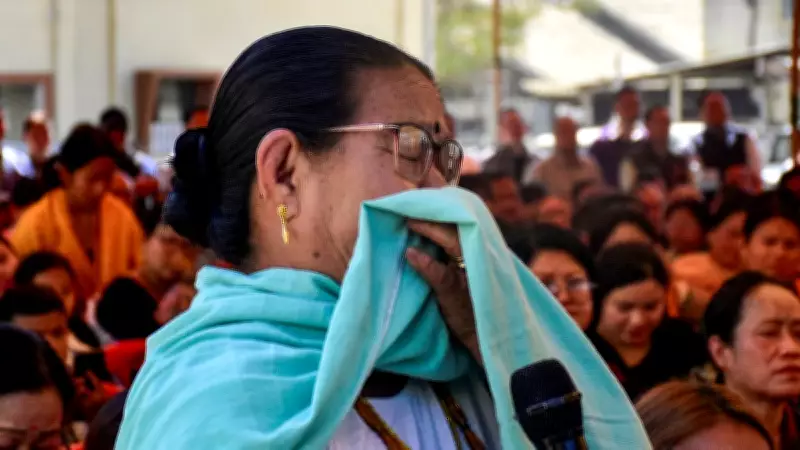
Historic Dialogue in Manipur: CM and Kuki-Zo Council Meet for First Time Since Government Restoration
In a pivotal moment for Manipur's troubled political landscape, a glimmer of hope emerged on Saturday as the state's Chief Minister engaged in a landmark meeting with leaders from the Kuki-Zo Council (KZC). This gathering marks the first direct dialogue between the two parties since the restoration of the state government, signaling a potential turning point in the protracted conflict that has plagued the region.
A Long-Awaited Encounter
The meeting, which took place on March 21, 2026, represents a critical step toward reconciliation. The Kuki-Zo Council, serving as the apex body for the Kuki-Zo communities, has long been a key stakeholder in Manipur's ethnic and political disputes. For years, tensions have simmered, with sporadic violence and deep-seated grievances hindering progress. The restoration of the government had previously failed to yield such high-level talks, making this encounter particularly noteworthy.
Observers note that the timing of this meeting is crucial, coming at a juncture where public frustration over the stalemate has been mounting. The Chief Minister's willingness to sit down with KZC leaders underscores a renewed commitment to finding a peaceful resolution, potentially paving the way for more structured negotiations in the near future.

Implications for Manipur's Future
The discussions, though details remain confidential, are believed to have covered a range of issues central to the conflict, including:
- Security concerns and measures to prevent further violence.
- Economic development initiatives aimed at addressing disparities.
- Cultural and political representation for the Kuki-Zo communities.
- Mechanisms for sustained dialogue and trust-building.
This meeting has injected a sense of optimism among residents and stakeholders alike, who have endured years of uncertainty. While challenges persist, the very fact that both sides have come to the table is seen as a positive sign. It suggests a shift from confrontation to conversation, which could lay the groundwork for a more stable and harmonious Manipur.
Looking Ahead: The Path to Peace
As the dust settles on this historic encounter, attention now turns to the follow-up actions. Analysts emphasize that for this flicker of hope to translate into tangible progress, several steps are necessary:
- Continued engagement: Regular meetings must be scheduled to build momentum.
- Inclusive participation: Involving other community groups to ensure a comprehensive solution.
- Transparency: Keeping the public informed to foster trust and support.
- Implementation of agreements: Moving from talks to actionable outcomes.
The meeting between the Chief Minister and the Kuki-Zo Council is more than just a diplomatic gesture; it is a beacon of possibility in a region yearning for peace. As Manipur watches closely, the hope is that this dialogue will evolve into a sustained process, ultimately leading to a breakthrough that benefits all communities involved.






